17家利用人工智能加速科学突破的组织
17 organizations using AI to accelerate scientific breakthroughs
以下为原文逐段中文翻译,保留图表与说明。AI 翻译并经 AI 对照复核,仍可能存在错误;核对数据和引用时请同时查看原文。译文发布:2026年10月17日 06:30(北京时间)。
2026年10月14日
|
这些团队通过 Google.org 影响力挑战赛“AI for Science”(科学人工智能)共获得3600万美元资金,用于推进以人工智能驱动的创新解决方案,应对全球性挑战。
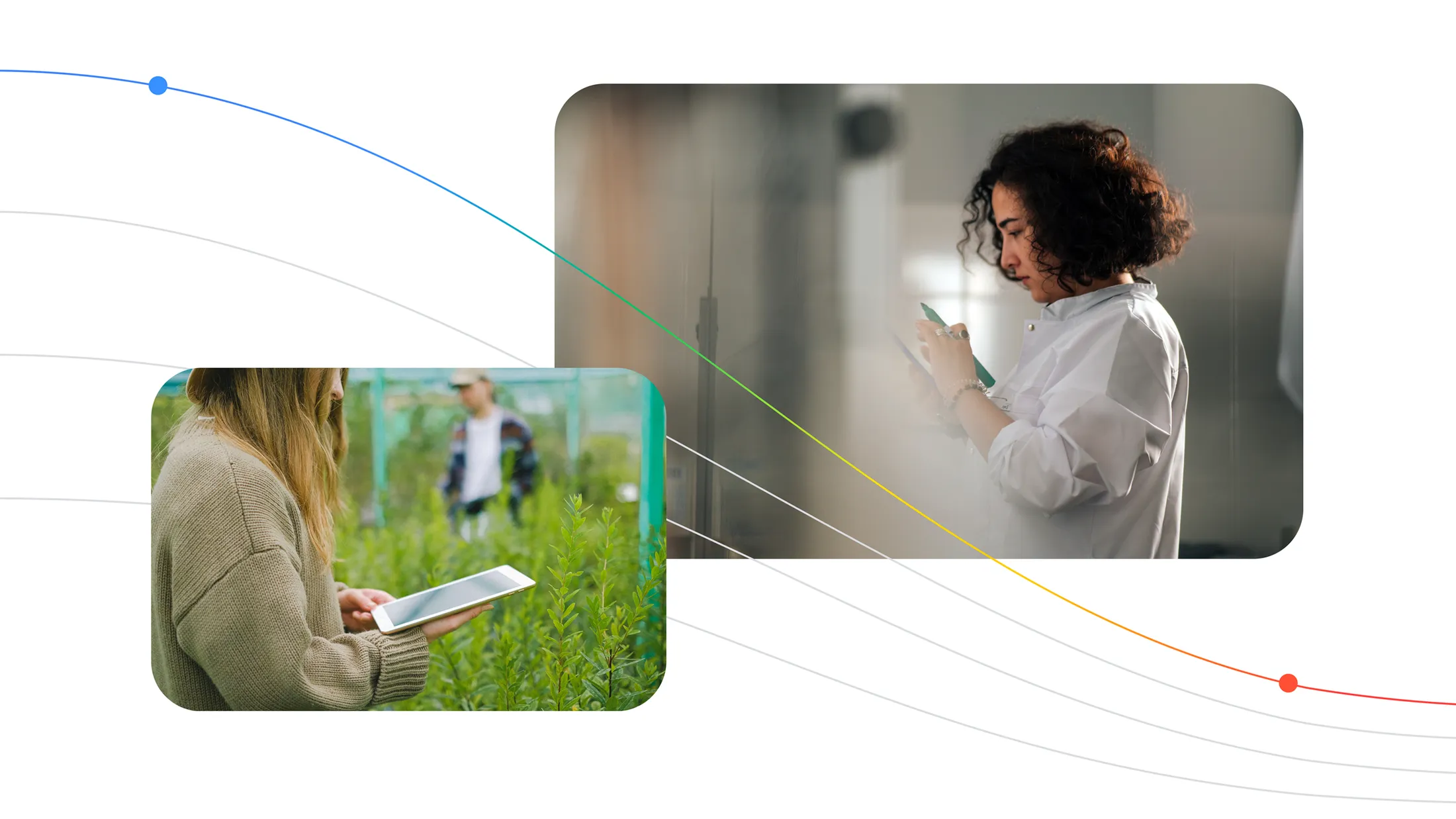
我们正站在科学发现的一个深刻转折点上。人工智能正在开启科学研究的新时代,从揭开人类疾病的复杂性到预测环境变化。这项工作旨在比以往任何时候都更快、更有效地应对全球挑战,改善各地人们的生活。
今年早些时候,我们发起了 Google.org 影响力挑战赛“AI for Science”,公开征集利用人工智能推动科学突破的组织。我们收到了来自30个国家、涵盖气候、健康和基础科学等领域的申请。
今天,我们公布入选的17家受资助组织,它们将共获得3600万美元的资金。这些组织可以选择参加为期六个月的 Google.org 加速器项目,届时将获得工程支持、技术指导和 Google 基础设施,将其构想转化为规模化解决方案。从先进的能源方法到解读大脑,这些组织正为造福社会而拓展科学发现的边界。
气候韧性与环境科学
- AfriClimate AI Limited 正在解读非洲致命风暴系统的大气前兆,目标是将山洪预警时间从不足三小时延长至六小时以上。
- Inria Chile Research Center 正通过创建地球海洋生态系统的数字孪生,构建一个海洋多模态世界基础模型。
- 麻省理工学院(Massachusetts Institute of Technology)正通过训练人工智能代理自主解读实验显微图像,加速自动化材料发现。
- 马克斯·普朗克等离子体物理研究所(Max Planck Institute for Plasma Physics)与埃因霍温理工大学(TU Eindhoven)合作,利用物理信息人工智能对聚变反应堆内的混沌条件建模,弥合清洁聚变能从模拟到现实的差距。
- 得克萨斯大学奥斯汀分校(The University of Texas at Austin)正在开发神经网络模型,以加速紧凑型聚变反应堆的设计。
- 加州大学圣地亚哥分校(UC San Diego)正在开创一条代理式人工智能流程,从地球观测中发现可解释的气候物理规律,构建下一代气候模型,并决定在何处采集新的海洋观测数据。
- 剑桥大学(University of Cambridge)正通过结合物理基础模型和显微技术来预测阴极退化,加速耐用钠离子电池的研发。
- 华盛顿大学(University of Washington)正用自然语言设计蛋白质,以推进可持续性应用,如塑料降解。
健康与生命科学
- AITHYRA Research Institute 与洛桑联邦理工学院(EPFL)合作,正在揭示病毒如何操纵细胞,并创建一个由人工智能设计的蛋白质库,以发现针对“不可成药”蛋白质的疗法。
- 艾伦研究所(Allen Institute)正在设计能够到达更易患神经退行性疾病的脑细胞类型的 DNA 序列,并公开分享每一个模型、序列和结果。
- 澳大利亚国立大学(Australian National University)正在牵头一项国际合作,旨在终结试错式化疗,推进公平的精准肿瘤学。
- 新加坡国立大学(National University of Singapore)正通过绘制遗传变异在人群尺度上如何调控 RNA 剪接,来预测疾病影响。
- 纽约大学格罗斯曼医学院(New York University Grossman School of Medicine)正利用人工智能检测多种类型的 DNA 损伤,以揭示未知的突变成因。
- 加州大学伯克利分校(University of California, Berkeley)正通过从医疗人工智能模型中提取可解释的假设,将黑箱预测转化为清晰的临床生物标志物。
- 开普敦大学(The University of Cape Town, UCT)正在开发一个由人工智能驱动的平台,以绘制非洲药物代谢基因的遗传变异图谱,帮助指导临床用药选择并提高治疗安全性。
- 匹兹堡大学(University of Pittsburgh)正利用一种新颖的几何人工智能模型比较不同物种的心脏再生,识别遗传开关以加速新的心脏疗法。
- 多伦多大学(University of Toronto)正利用一个人工智能基础模型绘制肽类药物的设计空间,实现计算机辅助的治疗性药物设计。
这些组织代表了应对世界上一些最紧迫挑战的令人振奋的一系列想法、学科和方法。我们期待支持它们的工作,并期待看到当科学专业知识与人工智能结合起来应对影响我们所有人的挑战时,一切将变得如何可能。
在您的收件箱中获取 Google 的最新消息
您的信息将依据 Google 的隐私政策使用。您可以随时选择退出。
发布于:
展开英文原文 · 与中文逐段对应
17 organizations using AI to accelerate scientific breakthroughs
Oct 14, 2026
|
These teams are receiving a total of $36 million through the Google.org Impact Challenge: AI for Science to advance innovative AI-powered solutions to global challenges.
We’re standing at a profound inflection point in scientific discovery. AI is ushering in a new era of scientific research, from unraveling the complexities of human disease to forecasting environmental shifts. This work aims to tackle global challenges faster and more effectively than ever before, improving lives everywhere .
Earlier this year, we launched the Google.org Impact Challenge: AI for Science , an open call to organizations harnessing AI for scientific breakthroughs. We received applications across 30 countries, in fields like climate, health, and foundational science.
Today, we’re announcing the 17 selected recipient organizations, which will receive a total of $36 million in funding. Organizations can choose to participate in a six-month Google.org Accelerator, where they will receive engineering support, technical mentorship, and Google infrastructure to transform their ideas into scaled solutions. From advanced energy approaches to decoding the brain, these organizations are pushing the boundaries of scientific discovery for societal impact.
Climate resilience and environmental science
- AfriClimate AI Limited is decoding the atmospheric precursors of deadly storm systems across Africa, aiming to extend flash-flood warning times from under three hours to over six hours.
- Inria Chile Research Center is building a multimodal world foundation model of the ocean by creating a digital twin of Earth's marine ecosystems.
- Massachusetts Institute of Technology is accelerating automated materials discovery by training AI agents to autonomously interpret experimental microscopic imagery.
- Max Planck Institute for Plasma Physics in partnership with TU Eindhoven, is bridging the simulation-to-reality gap for clean fusion energy by using physics-informed AI to model chaotic conditions inside fusion reactors.
- The University of Texas at Austin is developing neural network models to accelerate the design of compact fusion reactors.
- UC San Diego is pioneering an agentic AI pipeline that discovers interpretable climate physics from Earth observations, builds a next-generation climate model, and decides where to collect new ocean observations.
- University of Cambridge is accelerating the development of durable sodium-ion batteries by combining physics foundation models and microscopy to forecast cathode degradation.
- University of Washington is designing proteins with natural language to advance sustainability applications, such as plastic degradation.
Health and life sciences
- AITHYRA Research Institute, in collaboration with EPFL, is uncovering how viruses manipulate cells and creating an AI-designed protein library to discover therapeutics for undruggable proteins.
- Allen Institute is designing DNA sequences that reach brain cell types more vulnerable to neurodegenerative diseases, openly sharing every model, sequence, and result.
- Australian National University is leading an international collaboration to end trial-and-error chemotherapy and advance equitable precision oncology.
- National University of Singapore is predicting disease impacts by mapping how genetic variants regulate RNA splicing at a population scale.
- New York University Grossman School of Medicine is working to uncover unknown causes of mutations by detecting diverse types of DNA damage using AI.
- University of California, Berkeley is turning black-box predictions into clear clinical biomarkers by extracting interpretable hypotheses from medical AI models.
- The University of Cape Town (UCT) is developing an AI-powered platform to map genetic variation in African drug-metabolizing genes, helping guide clinical drug choices and improve treatment safety.
- University of Pittsburgh is identifying genetic switches to accelerate new cardiac therapies using a novel geometric AI model to compare heart regeneration across species.
- University of Toronto is enabling computer-guided therapeutic drug design by mapping the design space for peptide-based drugs with an AI foundation model.
These organizations represent an exciting range of ideas, disciplines, and approaches to some of the world’s most pressing challenges. We look forward to supporting their work and to seeing what becomes possible when scientific expertise and AI come together to tackle challenges that affect us all.
Get the latest news from Google in your inbox
Your information will be used in accordance with Google's privacy policy. You may opt out at any time.
Posted in:
查看本期独立摘要
中文独立摘要 · AI 整理
这件事
据谷歌官方博客报道,17家机构通过「Google.org影响力挑战:AI for Science」项目共获得3600万美元资助,用于推进以AI驱动的创新方案以应对全球挑战。该挑战赛于今年早些时候发起,公开征集利用AI推动科学突破的机构,共收到来自30个国家、涵盖气候、健康与基础科学等领域的申请。谷歌今日公布17家入选机构,合计获得3600万美元资金。
本页概括所列来源的重点,属于独立摘要;完整报道请阅读原站。整理时间:2026年10月17日 04:44(北京时间)。
信息从哪里来
依据 Google The Keyword 的RSS 摘要与原文节选整理,事实核对限于列明材料;不是原文全文翻译。
- Google The Keyword 来源报道(RSS 摘要与原文节选)