学生运动赢得历史性大选,塞尔维亚领导人武契奇在剧变中认输下台
Serbian leader Aleksandar Vučić ousted by student movement in seismic election
The Guardian
以下为原文逐段中文翻译,保留图表与说明。AI 翻译并经 AI 对照复核,仍可能存在错误;核对数据和引用时请同时查看原文。译文发布:2026年10月26日 08:15(北京时间)。
塞尔维亚长期执政的领导人亚历山大·武契奇(Aleksandar Vučić)已承认败选,在一场历史性的选举之后,一场剧烈的政治变局随之而来。这场选举中,这位日益专制的领导人与一个由学生领导的运动正面交锋——该运动两年来一直在抗议他的政府。
武契奇援引初步结果称,选民以压倒性多数支持学生,这可能使学生在该国250个席位的议会中占据多数。
“我们仍然没有最终结果,”武契奇在其位于贝尔格莱德的政党总部对支持者说。“根据抽样结果……很明显,我们已经输掉了这场选举,‘学生名单’获胜,他们将获得135至140个席位,而我们将获得105席。”
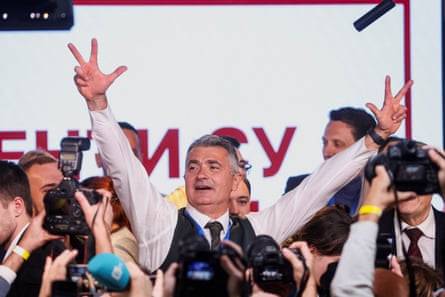
CESID-IPSPS民调机构的代表性样本显示,“学生名单”的候选人名单将获得138个议员席位,而武契奇所在的右翼塞尔维亚进步党(SNS)赢得104席。民调机构表示,剩余席位可能由各民族少数党派分享。
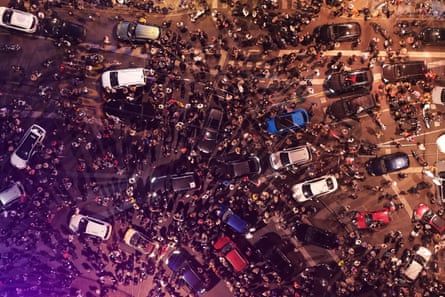
当武契奇长达12年的执政宣告结束的消息传出后,贝尔格莱德及其他城市的街头爆发了庆祝活动。
在首都,43岁的伊万娜(Ivana)欣喜若狂。“对我来说,这就像新年前夜,真的,就像三个新年前夜同时到来,”她说。“我们终于可以再次呼吸了。”她还表示,她希望被赶下台的政权高层尽快被追究责任——这是“学生名单”的一项关键竞选承诺。
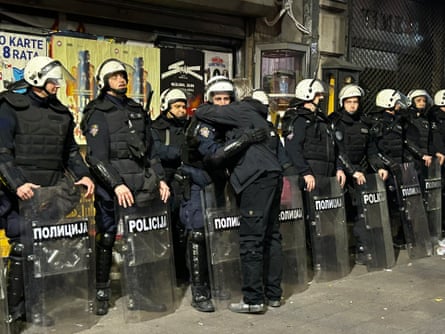
其他人在街头向警察握手、击掌相庆并拥抱,而过往汽车则响起了阵阵喇叭声。
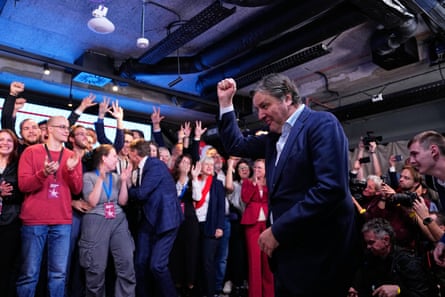
在“学生名单”总部,支持者们高呼“胜利,胜利!”,一边鼓掌、落泪、互相拥抱。贝尔格莱德大学教授拉多米尔·赛伊契奇(Radomir Saičić)在总部代表学生发言说:“亲爱的塞尔维亚,今夜人民的声音正在被听见。今夜我们庆祝胜利,明天我们建设未来。”
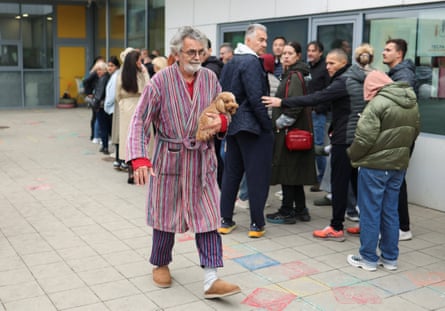
这些欢乐的场景出现在周日创纪录数量的选民前往投票数小时之后。全国各地的投票站外排起长龙,有些地方报告等待时间长达两小时。当地时间晚上7点,民调及监督机构CeSID和益普索(Ipsos)公布的投票率为67.6%,为1992年南斯拉夫解体以来的最高水平。
高投票率,加上上周约15万人涌向学生在贝尔格莱德举行的选前最后一场集会,引发了外界早期的猜测:学生们可能已经凝聚了足够的支持,从而在这个巴尔干国家开启一个新的政治时代。

在投票前夕,民意调查结果差异巨大,分析人士指出,由于代表基层学生运动的候选人与武契奇的SNS党正面交锋,局势存在高度不确定性。
这一结果将在全球范围内受到关注,它是全球“关键十天”选举的一部分——在此期间,威权右翼势力正与民主力量对峙。塞尔维亚学生领导的运动取得的胜利也可能在欧洲各地产生回响,为震撼欧洲各城市的青年与学生抗议活动增添动力。
在人们等待选举结果出炉之际,网络上已开始流传猜测,怀疑武契奇是否会不顾一切地试图保住权力。然而,他迅速承认败选,令人想起六个月前其盟友、邻国匈牙利总理维克托·欧尔班(Viktor Orbán)的做法,这助长了中欧民主复兴的希望。
这场事关重大的选举发生在欧盟候选国,其根源可追溯到2024年11月——当时诺维萨德(Novi Sad)火车站一处混凝土顶棚坍塌,造成16人死亡。随着证据表明,施工质量粗劣、欺诈和腐败是顶棚坍塌的罪魁祸首,这场悲剧引发了学生抗议,并滚雪球般演变成一场广泛的反政府运动。
随着日益专制的武契奇——这位主导塞尔维亚政坛十余年的领导人——面临学生日益增加的压力,他于上月辞去总统职务,以提前选举作为赌注。
学生们抓住了将这场运动转化为政治权力的机会。他们宣布了250名候选人,对应250个席位的议会,候选人涵盖学者、运动员和农民等,号召选民支持他们重建塞尔维亚经济、恢复民主的努力。
这场竞选让他们与武契奇SNS党的政治巨兽正面对抗,使他们陷入一场艰苦的战斗——对手是几乎控制了所有广播频道、并将各部委及其他国家机构当作政治工具的执政党。
武契奇曾多次试图通过指责学生是外国势力的傀儡来削弱他们,学生已驳斥了这一指控。他承诺提高养老金和公职人员工资,并试图将自己塑造成一个能够在塞尔维亚与西方、俄罗斯和中国的关系之间走外交钢丝、带领塞尔维亚渡过全球不确定性的领导人。
学生们毫不畏惧,走上街头,举行集会,出现在长期是武契奇据点的农村地区,挨家挨户地宣传,努力将自己塑造成反建制的候选人,并团结选民支持他们“塞尔维亚还是黑手党?”的口号。
周日,“学生名单”候选人、欧洲篮球联赛(Euroleague Basketball)主席德扬·博迪罗加(Dejan Bodiroga)在贝尔格莱德投下选票时,重申了这一信息。
“今天,最重要的是,塞尔维亚正在为自由、为一个被劫持的国家重回正轨而战,”博迪罗加对记者说。“今天的塞尔维亚投票,是为了决定它将走向何方——未来还是过去。”
在周日投票前夕,国际和地方选举监督机构都对拘留事件,以及针对活动人士的监视和网络攻击的报道表示关切。
周日,独立监督组织警告称,已记录到拍摄选票的案例,这表明存在对选民施压、试图贿选以及“旋转门式”重复投票的情况。
其中包括选举监督组织CRTA的拉沙·内德尔伊科夫(Raša Nedeljkov),他说:“大量违规行为仍在不断被记录,同时投票站外的暴力事件也变得越来越频繁。”
展开英文原文 · 与中文逐段对应
Serbian leader Aleksandar Vučić ousted by student movement in seismic election
The long-serving leader of Serbia , Aleksandar Vučić, has conceded defeat, ushering in a seismic political shift after a historic election that saw the increasingly authoritarian leader pitted against a student-led movement that had spent two years protesting against his government.
Vučić pointed to preliminary results that suggested voters had overwhelmingly backed the students, potentially giving them a majority in the country’s 250-seat parliament.
“We still do not have final results,” Vučić told supporters at his party headquarters in Belgrade. “On the basis of a sample … it is clear that we have lost these elections, the Student List has won, they will have between 135 and 140 seats and we will have 105.”
A representative sample by the CESID-IPSPS pollsters suggested that the Student List’s candidate list will have 138 deputies, while Vučić’s rightwing Serbian Progressive party (SNS) garnered 104 seats. The remaining seats were likely to be shared between ethnic national minority parties, said the pollsters.
As news broke that Vučić’s 12 years in power had come to an end, celebrations erupted on the streets of Belgrade and other cities.
In the capital, Ivana, 43, was ecstatic. “This feels like New Year’s Eve to me, like three New Year’s Eves all at once, really,” she said. “We can finally breathe again.” She added that she was hoping for swift accountability for top members of the ousted regime, a key campaign pledge from the Student List.
Others offered handshakes, high fives and hugs to police officers in the streets, while a chorus of honking horns rang out from passing cars.
At the headquarters of the Student List, supporters chanted “Victory, victory!” as they applauded, cried and traded hugs. “Dear Serbia, tonight the voice of the people is being heard,” said Radomir Saičić, a professor at Belgrade University, speaking on behalf of the students at their headquarters. “Tonight we celebrate victory, tomorrow we build the future.”
The scenes of joy came hours after a record number of voters turned up to cast their ballot on Sunday. Across the country, long lines snaked out of polling stations, with some reporting wait times of up to two hours. By 7pm local time pollsters and monitors CeSID and Ipsos put the turnout at 67.6%, the highest since the breakup of Yugoslavia in 1992.
The high turnout, along with the estimated 150,000 people who flocked to the students’ final pre-election rally last week in Belgrade, fuelled early speculation that the students may have rallied enough support to launch a new political era in the Balkan country.
In the lead-up to the vote, opinion polls had varied wildly, with analysts pointing to the high degree of uncertainty at play as the candidates representing the grassroots student movement went up against Vučić’s SNS.
The results will be watched across the world as part of 10 pivotal days of elections across the globe in which the authoritarian right is facing off against pro-democracy forces. The victory for the student-led movement in Serbia is also likely to reverberate across Europe, adding momentum to the youth and student protests that have rocked cities across the continent.
As people waited for the election results to come in, speculation had begun to swirl online about whether Vučić would seek to hold on to power regardless. His swift admission of defeat, however, was reminiscent of his ally, Viktor Orbán , in neighbouring Hungary six months ago, fuelling hopes of a democratic resurgence to central Europe.
The high-stakes election in the EU-candidate country traces back to November 2024, when a concrete canopy collapsed at the Novi Sad railway station, killing 16 people. The tragedy set off protests among students, snowballing into a broad anti-government movement as evidence suggested that slipshod construction, fraud and corruption were to blame for the roof collapse.
As Vučić, the increasingly authoritarian leader who has dominated Serbian politics for more than a decade, grappled with mounting pressure from the students, he resigned the presidency last month to gamble on snap elections.
The students seized on the chance to transform the movement into political power. They announced a slate of 250 candidates for the 250-seat parliament, ranging from academics to athletes and farmers, as they called on voters to back their push to rebuild Serbia’s economy and restore its democracy.
The campaign pitted them against the political monolith of Vučić’s SNS party, leaving them in an uphill battle against a ruling party that had taken over almost all of the broadcast channels and which wielded ministries and other state institutions as political tools.
Vučić had repeatedly sought to undermine the students by accusing them of being stooges of foreign powers, a charge that the students have dismissed. As he pledged to increase pensions and public sector salaries, Vučić sought to present himself as a leader capable of walking the diplomatic tightrope between the country’s ties with the west, and Russia and China to steer Serbia through global uncertainties.
Undaunted, the students took to the streets, staging rallies, turning up in the rural areas that had long been Vučić strongholds and going door-to-door as they sought to pitch themselves as the anti-establishment candidates and to rally voters behind their slogan of “Serbia or Mafia?”
The message was reiterated on Sunday as Dejan Bodiroga, a candidate on the Student List and the Euroleague Basketball president, cast his ballot in Belgrade.
“Today, above all, Serbia is fighting for freedom and for the return of a country that has been hijacked,” Bodiroga told reporters. “Serbia is voting today to decide which direction it will take – towards the future or the past.”
In the lead-up to Sunday’s vote, both international and local election monitors expressed concerns about detentions and reports of surveillance and cyber-attacks against activists.
On Sunday, independent monitoring groups warned of recorded cases of photographing of ballots that suggested pressure on voters, attempted vote-buying and carousel voting.
Among them was Raša Nedeljkov of the election monitory CRTA, who said that “a large number of irregularities continue to be recorded, while violent incidents outside polling stations are also becoming increasingly frequent”.
查看本期独立摘要
中文独立摘要 · AI 整理
这件事
塞尔维亚长期执政的武契奇承认在历史性议会选举中落败,由学生运动改组的“学生名单”据初步结果有望拿下250席中的138席,终结其12年执政。选举导火索是2024年诺维萨德火车站顶棚坍塌致死16人引发的抗议。多地爆发庆祝,但观察人士记录到买票、轮换投票等违规行为。
本页概括所列来源的重点,属于独立摘要;完整报道请阅读原站。整理时间:2026年10月26日 07:41(北京时间)。
信息从哪里来
据The Guardian报道,由本站译为全文中文。
- The Guardian 报道正文