OCP 全球峰会:在生态广泛采用之际,NVIDIA 开放 Vera Rubin 架构,助力全球扩展 AI 工厂
OCP Global Summit: Amid Ecosystem Adoption, NVIDIA Opens Vera Rubin Architecture to Help Scale AI Factories Worldwide
以下为原文逐段中文翻译,保留图表与说明。AI 翻译并经 AI 对照复核,仍可能存在错误;核对数据和引用时请同时查看原文。译文发布:2026年10月17日 06:30(北京时间)。
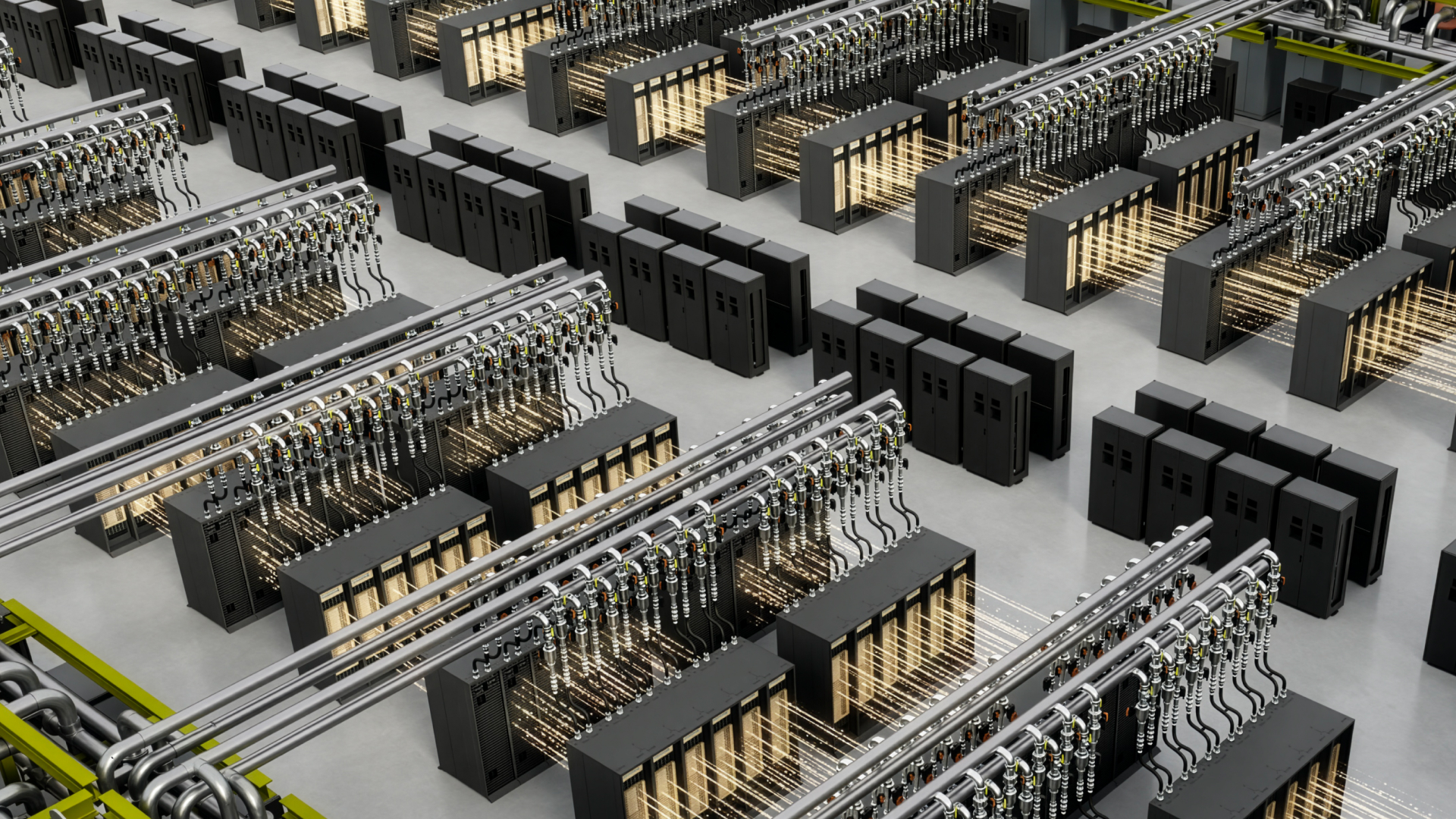
随着 AI 工厂从兆瓦级增长到吉瓦级,建造它们所需的已不止是先进计算。开放标准正帮助业界更快、更高效、更可靠地扩展 AI 基础设施。
在圣何塞麦克内里会议中心举行的开放计算项目(OCP)全球峰会上,NVIDIA 宣布了新的合作伙伴关系和贡献,旨在为下一代 AI 基础设施打造一个共同基础。
NVIDIA 通过开放的 NVIDIA MGX 架构,向 OCP 贡献了关键的 NVIDIA Vera Rubin 机架和计算托盘设计,为系统构建者开发下一代 AI 工厂基础设施提供了共同基础。
这些努力共同涵盖了 AI 工厂本身、为其供电的电网,以及处于现代加速计算核心的机架级架构。
NVIDIA 与合作伙伴宣布开放架构进展
在 OCP 活动上,NVIDIA 与合作伙伴发布了若干公告:
- NVIDIA 与超大规模云服务商发布了下一代 AI 工厂的开放标准,包括 AI 工厂设计标准和电网韧性标准。
- NVIDIA 为 NVIDIA DSX AI Factory 推出了新的开源软件组件。
- Meta 与 NVIDIA 借助 NVIDIA Spectrum-X 以太网 SuperNIC 和 Spectrum-6 创新,推进了开放 AI 网络。
- Visionbay 推出了面向 Vera Rubin 时代的 800V 直流 AI 工厂设计。
- NVIDIA 与思科宣布了超高密度小封装可插拔(USFP)标准,这是业界首个面向基于 400Gb/s 网络架构的模块。
- NVIDIA 与谷歌宣布,未来的 NVIDIA ConnectX-10 SuperNIC 和 BlueField DPU 将支持 Falcon Transport。
在座无虚席的观众面前,NVIDIA 超大规模与高性能计算副总裁伊恩·巴克讨论了开放基础设施如何正成为全球扩展 AI 工厂的关键要素。
OCP 上的这些消息凸显了 NVIDIA 的极致协同设计结合开放标准,如何加速部署、提升能效并推动每瓦代币(tokens-per-watt)性能。
Vera Rubin AI 工厂借助 OCP 上的 MGX 机架贡献取得进展 🔗
NVIDIA 与业界领袖一道,通过 OCP 的开放数据中心计划(Open DC Initiative)为第三代 MGX AI 数据中心参考设计做出贡献。
结合 MQD 和 MQDB 等开放液冷技术,这一努力有助于将经过验证的 AI 工厂设计转化为可供他人采用、制造和扩展的行业标准。
对于 NVIDIA Vera Rubin AI 工厂,更新后的 MGX 1.2 规范通过机架级盲插液冷、可互操作的机架级互连基础设施以及专为更高功率 AI 系统设计的液冷 5,000A 母排,扩展了 AI 工厂的开放架构。它还新增了对原生 19 英寸设备的支持和更高密度的机架设计。
MGX 1.2 通过可配置的 I/O 插槽、无风扇液冷计算托盘、标准化的供电和散热接口以及一个帮助生态伙伴构建可互操作加速计算平台的通用基础设施,进一步扩展了模块化程度。它缩短了组装、测试和服务时间,从而简化制造和现场服务,实现更快、更高效的基础设施建设。该架构支持最高 250kW 的机架部署,同时简化了可维护性、部署和基础设施复用。
Vera CPU 机架设计规范将 NVIDIA MGX 开放架构扩展到加速计算之外,为日益壮大的智能体 AI 时代提供了一个专门打造的平台。Vera Rubin NVL72 是大规模训练和推理的基础,而 NVIDIA Vera CPU 机架则旨在支持工具调用、编排和沙箱化执行,帮助 AI 智能体实时与应用、数据和服务交互。
Vera CPU 机架构建于第三代 NVIDIA MGX 机架架构之上,遵循相同的机架级设计原则,将计算、网络、供电和散热统一到一个通用的模块化平台中。这种方法使合作伙伴能够部署专门的基础设施,同时受益于共享生态、简化的集成以及面向下一代 AI 工厂的一致基础。

NVIDIA 为 DSX AI Factory 推出新的开源软件组件 🔗
NVIDIA DSX AI 工厂平台应用极致协同设计,统一计算、网络、供电、散热、设施和软件,帮助 AI 工厂作为单一优化系统运行,在现有基础设施约束下最大化 AI 产出。这一统一系统的核心是 DSX OS,这一开放操作层将 DSX 架构转化为规模化、协调一致且可重复的运营。
在 OCP 上,NVIDIA 用开源组件扩展了 DSX OS,用于配置网络、验证集群、管理机架和裸机配置:
- NVIDIA Config Manager:规模化自动完成交换机配置,让客户能够以最少甚至零人工干预来部署、验证和维护一致的 AI 工厂网络架构。
- NVIDIA Cluster Readiness Engine:通过以真实工作负载模拟对 GPU 集群进行压力测试,帮助消除代价高昂的任务崩溃,在训练开始前确保硬件健康。
- NVIDIA Rack Management Service:提供机架硬件抽象和运维解决方案,将机架作为一等单元对待,以改进 AI 工厂规模化固件管理。
- 面向 NVIDIA Infrastructure Controller 的 Cluster API Provider:加速裸机部署和租户接入,在数小时而非数天内将原始 AI 硬件转化为可投入生产的集群。
这些开源组件源自 NVIDIA 运营 NVIDIA DGX Cloud 的经验,使云服务提供商和软件合作伙伴能够将 AI 工厂能力直接整合到其多租户平台中。
开发者可以访问 DSX AI Factory 的 Github 页面,探索并为 NVIDIA DSX AI Factory 平台的新旧开源软件组件做出贡献。
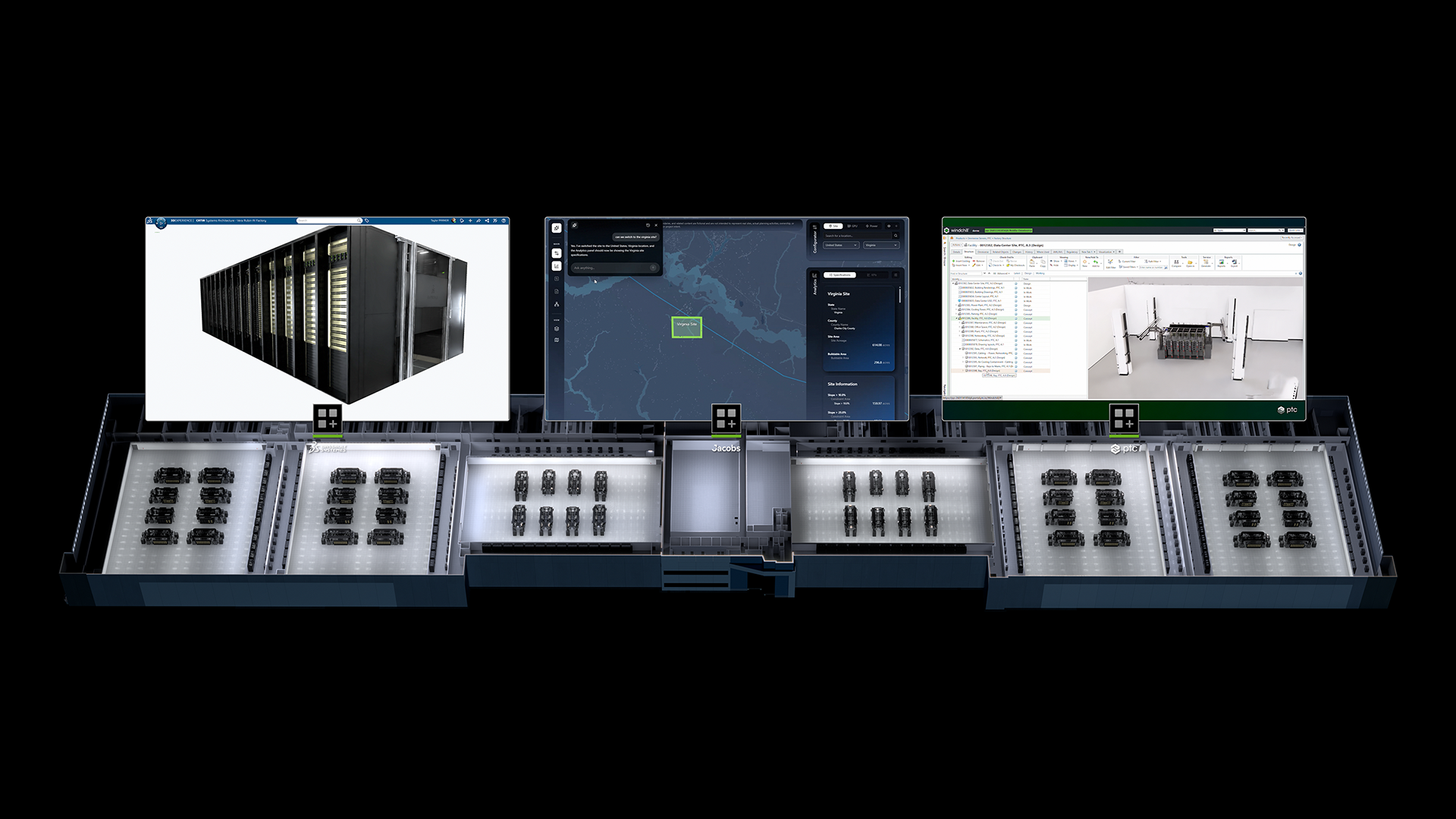
NVIDIA 与超大规模云服务商发布下一代 AI 工厂的开放标准 🔗
AI 基础设施要在全球范围内扩展,需要的不仅仅是先进硬件——它需要一个整个行业都能在其上构建的共同基础。
在 OCP 上,NVIDIA 与 AMD、谷歌和 Meta 一道发布了一项建立该基础的新开放规范。《开放数据中心规范》v0.7 为下一代 AI 工厂设施设计定义了统一蓝图——从供电架构到散热基础设施再到物理布局。
由谷歌、Meta、微软和 NVIDIA 发布的《OCP 电网韧性规范》,确立了大规模 AI 基础设施在电网扰动期间应如何表现:保持连接、自动响应,并在不到两秒内恢复到接近满负荷。
随着这些标准现已开放,世界各地的制造商有了共同的构建目标。设备制造商、托管服务提供商和数据中心运营商可以开始设计、制造和交付为全球在建 AI 工厂提供动力的基础设施层——而无需等待个别客户的专有规范。
这些规范与 NVIDIA DSX 参考设计兼容,为两份规范提供了经过验证、可部署的实现,涵盖从设施布局和供电架构到实时监控和响应电网信号的软件。对于构建 Vera Rubin AI 工厂的运营商而言,如今从开放社区标准到运行中的系统已是一条直线。
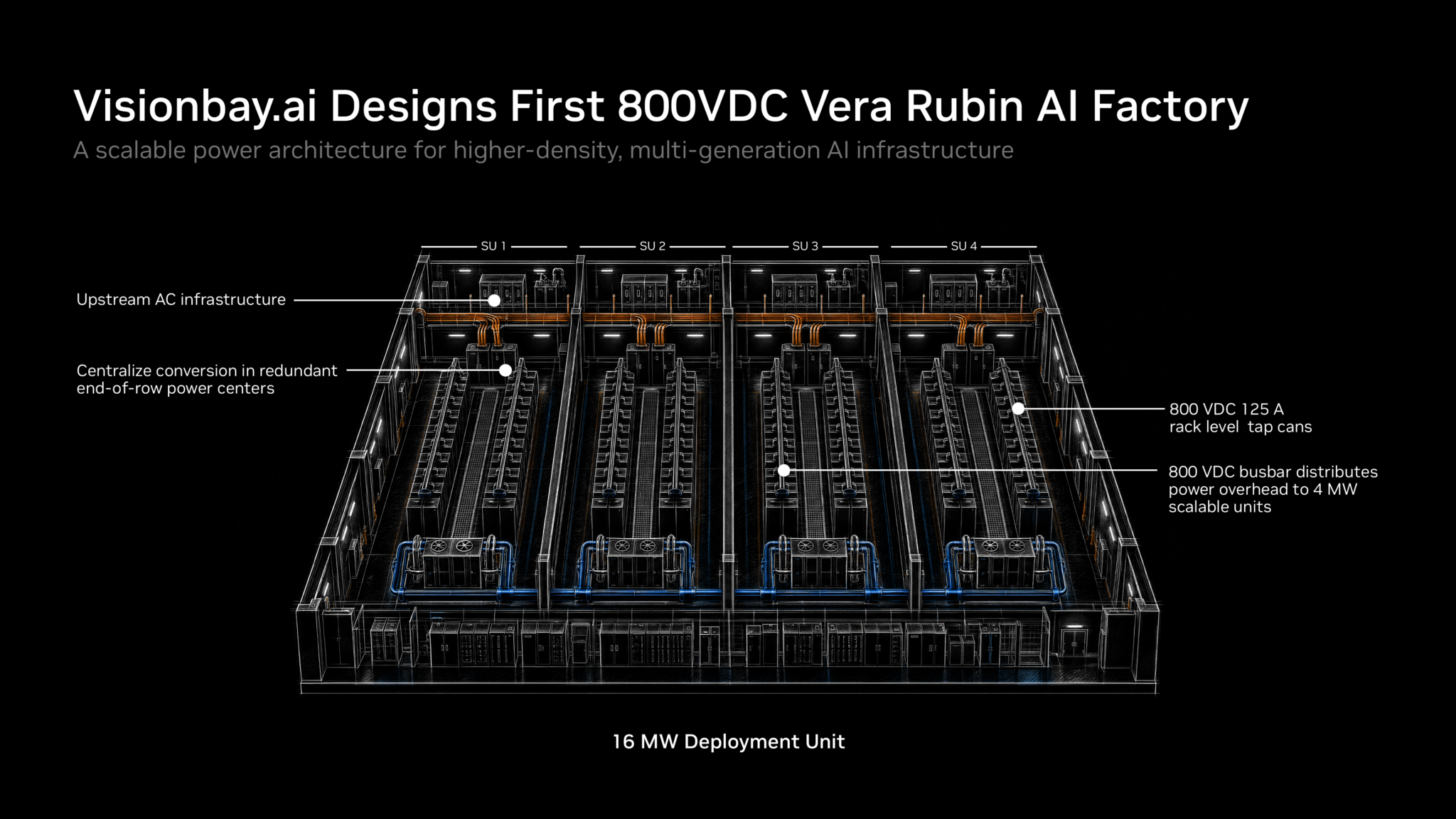
Visionbay.ai 为 Vera Rubin 时代设计 800VDC AI 工厂 🔗
随着 AI 工厂变得更大、更强大,有一个挑战笼罩着所有工厂:为驱动下一代 AI 的加速计算系统提供足够的电力。
在 OCP 上,Visionbay 公布了 K-1 的计划,这是一个围绕 800 VDC 架构设计、并着眼于未来 NVIDIA Vera Rubin 部署而打造的下一代 AI 工厂平台。该项目将 NVIDIA 的 800 VDC 参考架构与维谛技术(Vertiv)的供电和散热技术相结合,为高密度 AI 基础设施创建一个可扩展的基础。
该设计应对了业界日益严峻的挑战。随着 AI 训练、推断和推理工作负载的扩展,机架功率密度持续上升。传统的低压配电越来越难以扩展,需要更多的铜、更多的线缆和更多的电源转换设备。
通过采用 NVIDIA 的 800 VDC 架构,K-1 开辟了一条通向更高密度 AI 基础设施的道路,同时为现有部署保留了灵活性。该平台并非要求第一天就完成全面过渡,而是设计为在收益最大之处分阶段引入 800 VDC 配电,帮助运营商为未来几代加速计算做好准备,而无需对设施进行大规模改造。
该架构围绕集群级电力中心设计,将交流转直流集中处理,并将 800 VDC 配电更靠近计算资源。这种方法简化了下游电力输送,支持模块化扩展,并为未来 AI 工厂的增长创造出可重复的构建模块。
K-1 也体现了 NVIDIA AI 工厂背后的系统级设计理念,即供电、散热和计算协同设计。该项目支持液冷基础设施、可扩展配电以及未来的 Vera Rubin 级部署,展示了生态伙伴如何将 NVIDIA 的 AI 工厂架构转化为为下一代加速计算而设计的可部署基础设施。
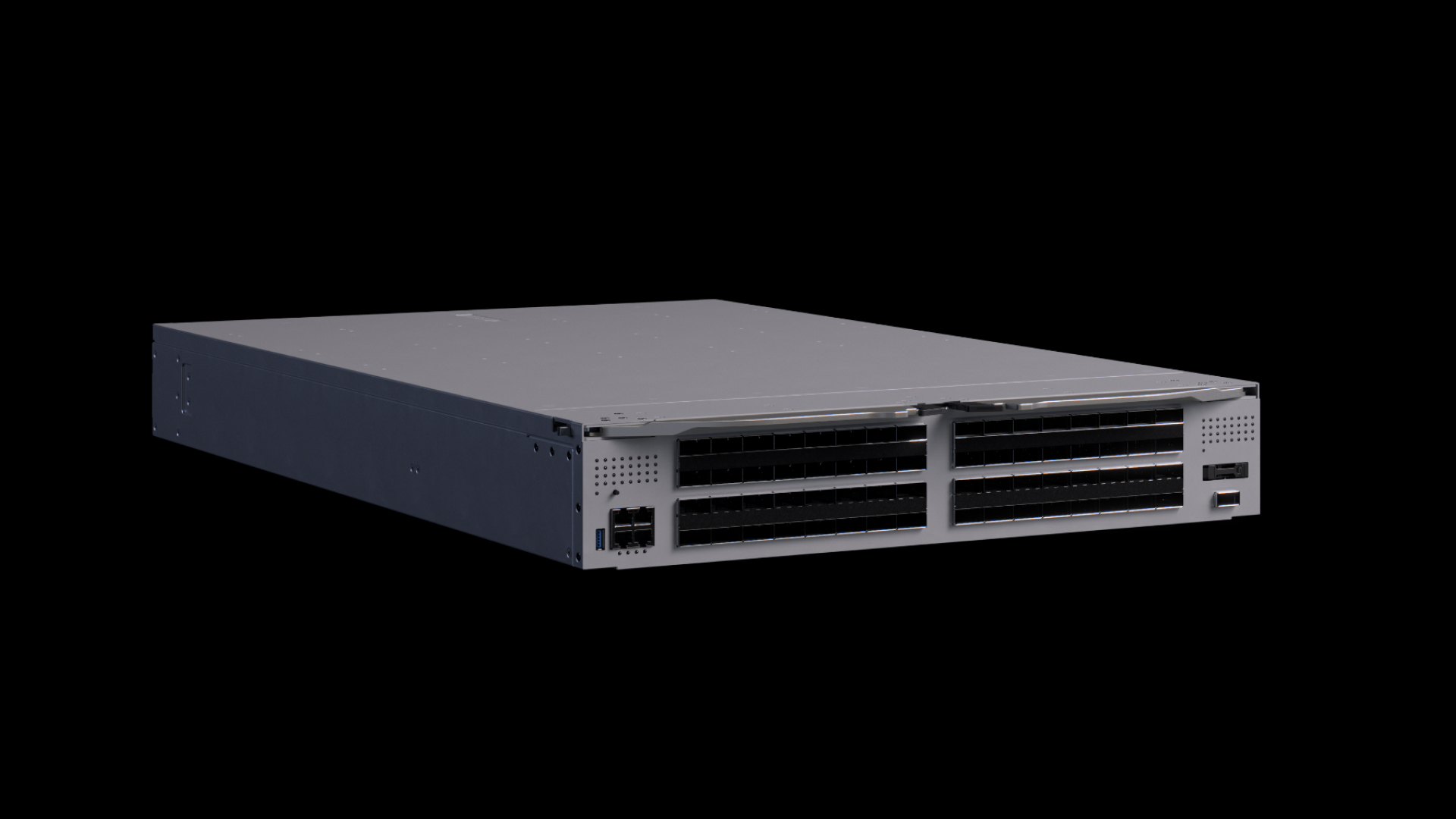
Meta 与 NVIDIA 借助 Spectrum-6 和多平面技术推进 AI 网络 🔗
在活动上,Meta 与 NVIDIA 宣布,Meta 正在采用 NVIDIA Spectrum-6 102.4Tb/s 以太网交换机,以在开放网络上构建更大、更高性能的 NVIDIA Vera Rubin AI 工厂。
Spectrum-6 的交换容量和每通道带宽是 Spectrum-4 的两倍,并提供每通道 200G 的无损以太网 AI 架构,具备高有效带宽和性能隔离,可防止一个任务的流量拖慢另一个任务。
Meta 基于 Spectrum-6 的交换机 N-IceCube 可插入 IcePack——Meta 的 100T 液冷机架。N-IceCube 运行 Facebook 开放交换系统(FBOSS),这是 Meta 贡献给 OCP 的开源网络操作系统,用于支持超大规模下的高效网络。
FBOSS 构建于交换机抽象接口之上,这是 NVIDIA 参与开发的 OCP 标准,提供了一种独立于厂商的控制交换机硬件的方式。这些技术共同支持超过 100,000 个 GPU 的智能体 AI 工厂,用于训练和服务大规模的混合专家模型。
这一公告标志着双方合作迈出的下一步,将 Meta 在超大规模下运营 AI 基础设施的经验与 NVIDIA 的网络技术相结合。
这项合作的核心是 Spectrum-X 多平面技术,由 Spectrum-6 交换机和 ConnectX-9 SuperNIC 支持。多平面技术在硬件层面将 GPU 流量分布到多达八个独立的网络平面,使 AI 工厂能够以更少的交换机层级和更低的基础设施成本扩展到 100,000 个 GPU 以上。GPU 之间的多条路径提升了网络利用率和韧性:当某个组件发生故障时,流量会转移到其余平面,即使在带宽降低的情况下也能保持 GPU 高效运转和 AI 应用持续运行。
Meta 与 NVIDIA 通过部署经验和快速工程迭代携手加强这一韧性。双方团队在本地和云环境中验证了这些改进。
“我们对与 NVIDIA 的紧密合作感到兴奋,正是这种合作使多平面架构在运营上可扩展且性能出色,这对我们自身的基础设施建设和我们的联合云合作伙伴都是一项关键要求,”Meta 数据中心与 AI 网络高级总监奥马尔·巴尔多纳多表示。“将 FBOSS 扩展到 Spectrum ASIC 意味着我们可以在自己的架构上运行同一套软件栈,而 Meta 新的基于 Spectrum 的交换机 N-IceCube 将其带入 Icepack——我们用于横向扩展的液冷 102.4T 网络机架,用来连接我们机群中即将推出的各代加速器。”
Meta 与 NVIDIA 正在共同开发一套可供其他 AI 基础设施运营商采用的架构和运营手册,将来自严苛生产工作负载的经验转化为更具可扩展性、韧性和效率的 AI 工厂。
借助 USFP,NVIDIA 与思科重新定义面向 AI 工厂规模的可插拔光模块 🔗
随着 AI 工厂扩展以支持更大的模型和激增的推理需求,基础设施栈的每一个组件都必须提供更高的性能、效率和简洁性——一直细化到网络连接本身。
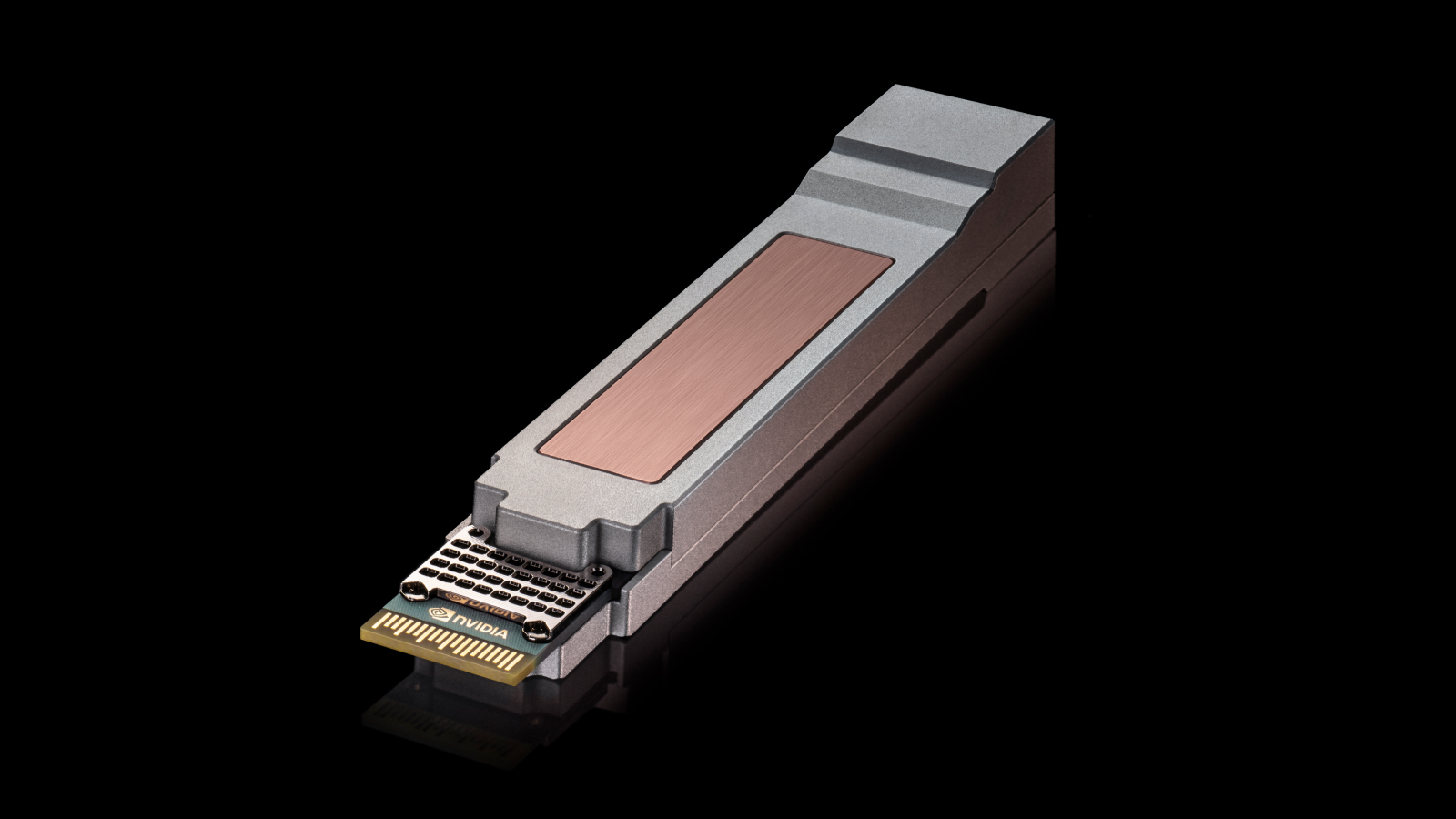
在 OCP 上,NVIDIA 与思科公布了 USFP 的计划,这是一种全新的光可插拔收发器模块封装形式,旨在帮助 AI 工厂构建者扩展下一代 AI 架构,同时提升带宽密度和电源效率。
USFP 的占位面积与广泛采用的每通道 200Gb/s OSFP 封装大致相同,将开辟通往每通道 400Gb/s 网络的道路,并延续一种已在多代数据中心网络中得到验证的基于收发器的部署模式。USFP 集成 16 条全双工通道并计划扩展至 32 条通道,将提供传统每通道 200Gb/s 可插拔光模块四倍的带宽密度。
其结果是能够在不增加网络层级(这可能增加延迟、功耗和复杂性)的情况下连接更多计算资源。
这一新封装形式专为下一代 AI 工厂的规模和效率需求而设计,在支持更高带宽架构的同时,保留了使可插拔光模块成为现代数据中心中坚的灵活性和可维护性。它还将带来约 1.3 倍的电源效率提升,帮助运营商以更少的能源传输更多数据。
为助力推动开放生态,NVIDIA 和思科正与泰科电子(TE Connectivity)和安费诺(Amphenol)在笼架、连接器和模块方面展开合作,并计划通过社区主导、多来源供应的努力来推进 USFP。这些公司正在共同为更具可扩展性、效率和互操作性的 AI 工厂网络奠定基础。
谷歌 Falcon Transport 支持 NVIDIA ConnectX-10,实现可互操作的 AI 网络 🔗
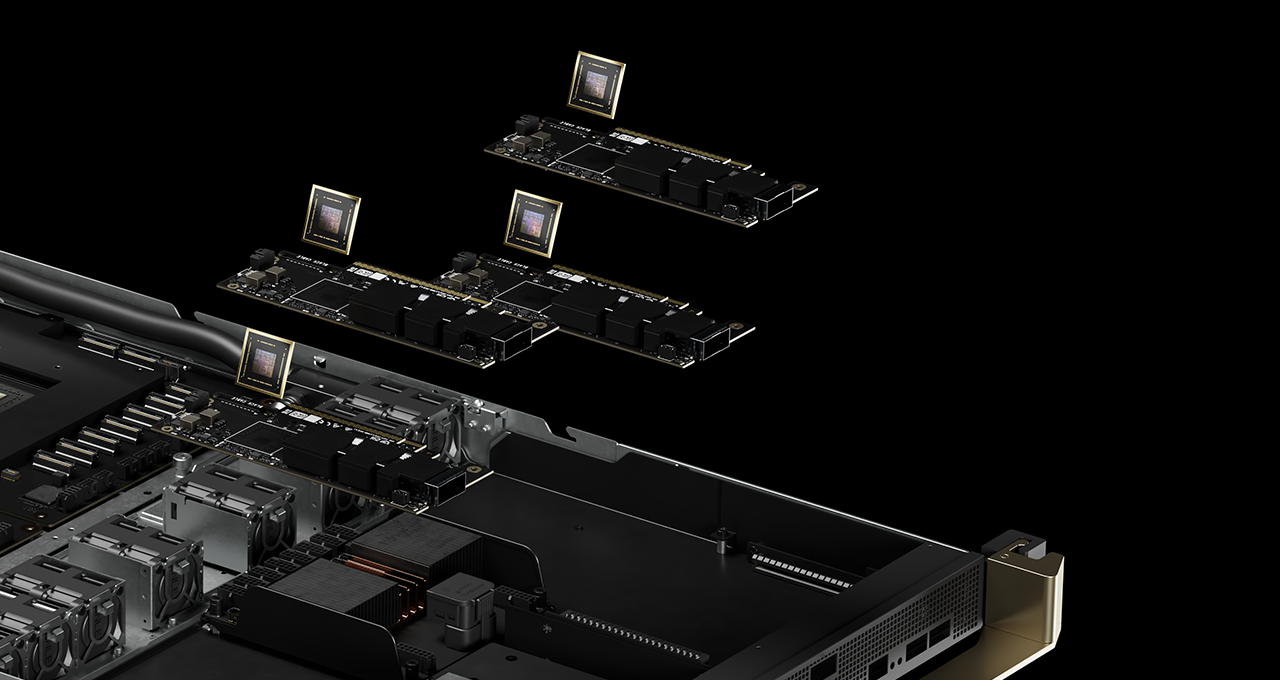
NVIDIA 与谷歌还宣布,未来的 NVIDIA ConnectX-10 SuperNIC 和 BlueField DPU 将支持 Falcon Transport,帮助提升大规模 AI 基础设施的网络效率。
Falcon 是一种传输协议,旨在通过以太网可靠地传输数据——以太网在拥塞时可能会丢包。它通过多路径负载均衡、可编程拥塞控制、硬件丢包恢复和逐连接安全,支持 AI 和存储工作负载。
这一合作将 NVIDIA 硬件加速与 DOCA 软件相结合,以实现 Falcon,并将 NVIDIA 网络扩展到谷歌的数据中心传输。NVIDIA 和谷歌的网卡可以通过共同的传输协议通信,同时应用保留标准的 RDMA 编程接口。
通过将流量分布到多条路径、适应拥塞、恢复丢包并保护连接,Falcon 帮助工作负载更好地利用可用带宽,并在以太网架构扩展时保持可预测的性能。
如需了解更多,请在 OCP 上加入 NVIDIA。
展开英文原文 · 与中文逐段对应
OCP Global Summit: Amid Ecosystem Adoption, NVIDIA Opens Vera Rubin Architecture to Help Scale AI Factories Worldwide
As AI factories grow from megawatts to gigawatts, building them takes more than advanced computing. Open standards are helping the industry scale AI infrastructure faster, more efficiently and more reliably.
At the Open Compute Project (OCP) Global Summit, taking place in the San Jose McEnery Convention Center, NVIDIA announced new partnerships and contributions aimed at creating a common foundation for next-generation AI infrastructure.
NVIDIA contributed key NVIDIA Vera Rubin rack and compute tray designs to OCP through the open NVIDIA MGX architecture, giving system builders a common foundation for developing next-generation AI factory infrastructure.
Together, these efforts span the AI factory itself, the utility grid that powers it and the rack-scale architecture at the heart of modern accelerated computing.
NVIDIA and Partners Announce Open Architecture Advances
At the OCP event, NVIDIA and partners made a handful of announcements:
- NVIDIA and hyperscalers published open standards for next-generation AI factories, including AI factory design standards and grid resilience.
- NVIDIA launched new open source software components for NVIDIA DSX AI Factory.
- Meta and NVIDIA advanced open AI networking with NVIDIA Spectrum-X Ethernet SuperNIC and Spectrum-6 innovations.
- Visionbay introduced an 800V DC AI factory design for the Vera Rubin era.
- NVIDIA and Cisco announced the Ultra-Dense Small Form Factor Pluggable (USFP) standard, the industry’s first module for 400Gb/s-based networking fabrics.
- NVIDIA and Google announced Falcon Transport support on future NVIDIA ConnectX-10 SuperNICs and BlueField DPUs.
Before a packed audience, Ian Buck, vice president of hyperscale and high-performance computing at NVIDIA, discussed how open infrastructure is becoming a critical ingredient for scaling AI factories worldwide.
The news at OCP spotlights how NVIDIA’s extreme codesign combined with open standards is accelerating deployment, improving power efficiency and driving tokens-per-watt performance.
Vera Rubin AI Factories Advance With MGX Rack Contributions at OCP 🔗
NVIDIA joined industry leaders in contributing to the third-generation MGX AI data center reference design through OCP’s Open DC Initiative.
Combined with open liquid-cooling technologies such as MQD and MQDB, the effort helps turn proven AI factory designs into industry standards that others can adopt, manufacture and scale.
For NVIDIA Vera Rubin AI factories, the updated MGX 1.2 specification extends the open architecture for AI factories with rack-scale blind-mate liquid cooling, interoperable rack-scale interconnect infrastructure and a liquid-cooled 5,000A busbar designed for higher-power AI systems. It also adds native 19-inch equipment support and higher-density rack designs.
MGX 1.2 further expands modularity with configurable I/O bays, fanless liquid-cooled compute trays, standardized power and cooling interfaces, and a common infrastructure that helps ecosystem partners build interoperable accelerated computing platforms. It improves assembly, test and service times to streamline manufacturing and field service to enable faster and more efficient infrastructure buildout. The architecture supports rack deployments up to 250kW while simplifying serviceability, deployment and infrastructure reuse.
The Vera CPU rack design specification extends the NVIDIA MGX open architecture beyond accelerated computing, providing a purpose-built platform for the growing agentic AI era. While Vera Rubin NVL72 serves as the foundation for large-scale training and inference, the NVIDIA Vera CPU rack is designed to support tool calling, orchestration and sandboxed execution, helping AI agents interact with applications, data and services in real time.
Built on the third-generation NVIDIA MGX rack architecture, the Vera CPU rack shares the same rack-scale design principles that unite compute, networking, power and cooling into a common modular platform. This approach enables partners to deploy specialized infrastructure while benefiting from a shared ecosystem, simplified integration and a consistent foundation for next-generation AI factories.
NVIDIA Launches New Open Source Software Components for DSX AI Factory 🔗
NVIDIA DSX AI factory platform applies extreme codesign to unify computing, networking, power, cooling, facilities and software, helping AI factories operate as a single optimized system, maximizing AI output within available infrastructure constraints. At the center of this unified system is DSX OS, the open operating layer that turns the DSX architecture into coordinated, repeatable operations at scale.
At OCP, NVIDIA expanded DSX OS with open source components for configuring networks, validating clusters, managing racks and provisioning bare metal:
- NVIDIA Config Manager: Automates switch configurations at scale, allowing customers to deploy, validate and maintain consistent AI factory network fabrics with minimal to zero manual intervention.
- NVIDIA Cluster Readiness Engine: Helps eliminate costly job crashes by stress-testing GPU clusters with real workload simulations to guarantee hardware health before training begins.
- NVIDIA Rack Management Service: Offers a rack hardware abstraction and operations solutions that treats racks as first-class units for improved AI factory scale firmware management.
- Cluster API Provider for NVIDIA Infrastructure Controller: Accelerates bare-metal deployment and tenant onboarding, turning raw AI hardware into production-ready clusters in hours instead of days.
Developed from NVIDIA’s experience running NVIDIA DGX Cloud, these open source components enable cloud providers and software partners to integrate AI factory capabilities directly into their multi-tenant platforms.
Developers can visit the DSX AI Factory Github page to explore and contribute to both the new and existing open source software components from NVIDIA DSX AI Factory platform.
NVIDIA and Hyperscalers Publish Open Standards for Next-Generation AI Factories 🔗
For AI infrastructure to scale globally, it needs more than advanced hardware — it needs a common foundation that the entire industry can build on.
At OCP, NVIDIA joined AMD, Google and Meta t o publish a new open specification that establishes that foundation. The Open Data Center Specification v0.7 defines a unified blueprint for next-generation AI factory facility design — from power architecture to cooling infrastructure to physical layout.
The OCP Grid Resilience Specification , published by Google , Meta, Microsoft and NVIDIA, establishes how large-scale AI infrastructure should behave during utility grid disturbances: staying connected, responding automatically and restoring to near-full load within less than two seconds.
With these standards now open, manufacturers around the world have a common target to build for. Equipment makers, colocation providers and data center operators can begin designing, fabricating and delivering the infrastructure layer that powers AI factories under construction globally — without waiting for proprietary specifications from individual customers.
Being NVIDIA DSX reference design -compatible, these specifications provide a validated, deployable implementation of both specs, from facility layout and power architecture to the software that monitors and responds to grid signals in real time. For operators building Vera Rubin AI factories, there’s now a straight line from open community standard to a running system.
Visionbay.ai Designs 800VDC AI Factory for the Vera Rubin Era 🔗
As AI factories grow larger and more powerful, one challenge looms over them all: delivering enough power to the accelerated computing systems driving the next generation of AI.
At OCP, Visionbay unveiled plans for K-1, a next-generation AI factory platform designed around an 800 VDC architecture and built with future NVIDIA Vera Rubin deployments in mind. The project combines NVIDIA’s 800 VDC reference architecture with power and thermal technologies from Vertiv to create a scalable foundation for high-density AI infrastructure.
The design addresses a growing industry challenge. As AI training, inference and reasoning workloads expand, rack power densities continue to rise. Traditional low-voltage power distribution becomes increasingly difficult to scale, requiring more copper, more cabling and more power-conversion equipment.
By adopting NVIDIA’s 800 VDC architecture, K-1 creates a path toward higher-density AI infrastructure while preserving flexibility for existing deployments. Rather than requiring a complete transition on day one, the platform is designed to phase in 800 VDC distribution where it delivers the greatest benefit, helping operators prepare for future generations of accelerated computing without extensive facility redesign.
The architecture is designed around cluster-level power centers that centralize AC-to-DC conversion and distribute 800 VDC closer to compute resources. The approach simplifies downstream power delivery, supports modular expansion and creates repeatable building blocks for future AI factory growth.
K-1 also reflects the system-level design philosophy behind NVIDIA AI factories, where power, cooling and computing are engineered together. With support for liquid-cooled infrastructure, scalable power distribution and future Vera Rubin-class deployments, the project demonstrates how ecosystem partners are translating NVIDIA’s AI factory architecture into deployable infrastructure designed for the next era of accelerated computing.
Meta and NVIDIA Advance AI Networking With Spectrum-6 and Multiplane Technology 🔗
At the event, Meta and NVIDIA announced that Meta is adopting NVIDIA Spectrum-6 102.4Tb/s Ethernet switches to build larger, higher-performance NVIDIA Vera Rubin AI factories on open networking.
Spectrum-6 delivers twice the switching capacity and per-lane bandwidth of Spectrum-4, and provides a lossless Ethernet AI fabric at 200G per lane, with high effective bandwidth and performance isolation that keeps one job’s traffic from slowing another’s.
Meta’s Spectrum-6-based switch, N-IceCube, slots into IcePack, Meta’s 100T, liquid-cooled rack. N-IceCube runs the Facebook Open Switching System (FBOSS), Meta’s open source network operating system that contributed to OCP to support efficient networking at hyperscale.
FBOSS is built on the Switch Abstraction Interface, an OCP standard NVIDIA helped develop, providing a vendor-independent way of controlling switch hardware. Together, these technologies support agentic AI factories of more than 100,000 GPUs that train and serve massive mixture-of-experts models.
The announcement marks the next step in a collaboration that combines Meta’s experience operating AI infrastructure at hyperscale with NVIDIA’s networking technology.
At the heart of this collaboration is Spectrum-X Multiplane technology, enabled by Spectrum-6 switches and ConnectX-9 SuperNICs. Multiplane distributes GPU traffic in hardware across up to eight independent network planes, enabling AI factories to scale beyond 100,000 GPUs with fewer switch tiers and lower infrastructure costs. Multiple paths between GPUs improve network utilization and resilience: when a component fails, traffic shifts to the remaining planes, keeping GPUs productive and AI applications running, even at reduced bandwidth.
Meta and NVIDIA worked together to strengthen that resilience through deployment experience and rapid engineering iteration. The teams validated improvements across on-premises and cloud environments.
“We are excited about our close partnership with NVIDIA in making multiplane fabrics operationally scalable and performant, a critical requirement both for our own infrastructure builds and for our joint cloud partners,” said Omar Baldonado, senior director of data center and AI networking at Meta. “Extending FBOSS to Spectrum ASICs means we can run that same software stack across our fabrics, and Meta’s new Spectrum-based switch, N-IceCube, brings that into Icepack – our liquid-cooled 102.4T network rack for scale-out that connects upcoming generations of accelerators in our fleet.”
Together, Meta and NVIDIA are developing an architecture and operational playbook that other AI infrastructure operators can adopt, turning lessons from demanding production workloads into more scalable, resilient and efficient AI factories.
With USFP, NVIDIA and Cisco Reinvent Pluggable Optics for AI Factory Scale 🔗
As AI factories scale to support larger models and surging inference demand, every component of the infrastructure stack must deliver more performance, efficiency and simplicity — right down to the network connection itself.
At OCP, NVIDIA and Cisco announced plans for USFP, a new optical pluggable transceiver module form factor designed to help AI factory builders scale next-generation AI fabrics while improving bandwidth density and power efficiency.
With approximately the same footprint as the widely adopted 200Gb/s-per-lane OSFP form factor, USFP will provide a path to 400Gb/s-per-lane networking and will extend a transceiver-based deployment model already proven across generations of data center networks. Packing 16 full-duplex lanes with plans to scale up to 32 lanes, USFP will deliver four times the bandwidth density of traditional 200Gb/s-per-lane pluggable optics.
The result is the ability to connect more compute resources without adding network tiers that can increase latency, power consumption and complexity.
The new form factor is designed for the scale and efficiency demands of next generation AI factories, supporting higher-bandwidth fabrics while preserving the flexibility and serviceability that have made pluggable optics a mainstay of modern data centers. It also will deliver roughly 1.3x greater power efficiency, helping operators move more data with less energy.
To help drive an open ecosystem, NVIDIA and Cisco are collaborating with TE Connectivity and Amphenol on cages, connectors and modules, with plans to advance USFP through a community-led, multi-source effort. Together, the companies are laying the foundation for more scalable, efficient and interoperable AI factory networking.
Google Falcon Transport Supports NVIDIA ConnectX-10 for Interoperable AI Networking 🔗
NVIDIA and Google also announced Falcon Transport support on future NVIDIA ConnectX-10 SuperNICs and BlueField DPUs, helping improve network efficiency for large-scale AI infrastructure.
Falcon is a transport protocol designed to deliver data reliably over Ethernet networks, which can otherwise drop packets under congestion. It supports AI and storage workloads through multipath load balancing, programmable congestion control, hardware loss recovery and per-connection security.
This collaboration combines NVIDIA hardware acceleration with DOCA software to implement Falcon and extend NVIDIA networking to Google’s data center transport. NVIDIA and Google NICs can communicate over a common transport while applications retain standard RDMA programming interfaces.
By distributing traffic across paths, adapting to congestion, recovering dropped packets and protecting connections, Falcon helps workloads make better use of available bandwidth and maintain predictable performance as Ethernet fabrics scale.
Learn more by joining NVIDIA at OCP .
查看本期独立摘要
中文独立摘要 · AI 整理
这件事
随着AI工厂从兆瓦级迈向吉瓦级,建设它们不只是靠先进算力,开放标准正帮助行业更快、更高效、更可靠地扩展AI基础设施。在圣何塞麦肯尼会议中心举行的开放计算项目(OCP)全球峰会上,英伟达宣布新的合作与贡献,旨在为下一代AI基础设施打造共同基础。英伟达通过开放的NVIDIA MGX架构,向OCP贡献了关键的Vera Rubin机架与计算托盘设计,为系统厂商提供开发下一代AI工厂基础设施的共同基础。这些工作涵盖AI工厂本身、为其供电的电网以及处于现代加速计算核心的机架级架构。
本页概括所列来源的重点,属于独立摘要;完整报道请阅读原站。整理时间:2026年10月17日 04:44(北京时间)。
信息从哪里来
依据 NVIDIA 官方博客 的RSS 摘要与原文节选整理,事实核对限于列明材料;不是原文全文翻译。
- NVIDIA 官方博客 来源报道(RSS 摘要与原文节选)