“我们在窒息”:住房与生活成本压力加剧,抗议蔓延至里斯本和米兰
‘We are suffocating’: protests spread to Lisbon and Milan as housing and living cost tensions intensify
The Guardian
以下为原文逐段中文翻译,保留图表与说明。AI 翻译并经 AI 对照复核,仍可能存在错误;核对数据和引用时请同时查看原文。译文发布:2026年10月19日 07:45(北京时间)。
近几周来席卷西班牙和法国的愤怒抗议活动已蔓延至意大利和葡萄牙:在米兰,示威者与警察发生冲突并纵火焚烧财产;而在上周末,里斯本也冒出了一个帐篷营地。
周六,米兰市中心一场抗议生活成本上涨的游行起初和平进行,但最终以蒙面暴徒向防暴警察投掷石块、铺路砖块和其他物品,并点燃用吧台桌搭成的路障而告终。
警方使用水炮和催泪瓦斯驱散人群,事后的画面显示一辆宪兵车严重受损。
据 LaPresse 通讯社报道,至少两名警察受伤,约 50 名示威者(包括许多未成年人)被拘留。
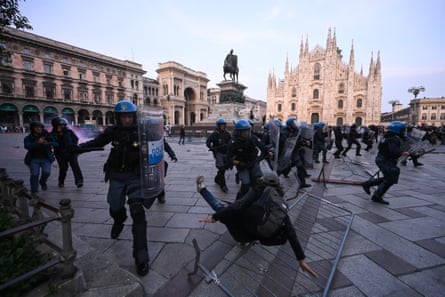
意大利总理乔治娅·梅洛尼(Giorgia Meloni)表示,虽然示威是一项权利,但“把我们的城市付之一炬则不是”。她在社交媒体发文中称,“流氓”利用了抗议活动,“来播撒混乱、袭击负责维护安全的人员,并将整座城市扣为人质”。
米兰中左翼市长朱塞佩·萨拉(Giuseppe Sala)表示,虽然“抗议的理由可以理解,但针对执法部门的暴力以及对城市的严重破坏是不可原谅的”。
在里斯本,抗议者搭建了一个帐篷营地,让人想起三周前在马德里建立的那个,他们要求采取行动应对住房危机和生活成本问题。
在吸引全国数千人参与的游行之后,数百名抗议者夜间在罗西奥广场(Rossio Square)——位于葡萄牙首都繁华的旅游中心——集结。
参与者们誓言要通宵留守,数百人围坐在广场上占主导地位的佩德罗四世国王雕像周围唱歌。
“纳税、维系这个国家运转的葡萄牙社会阶层正受到攻击,并正在丧失其权利,尤其是住房权,”46 岁的社会助理埃琳娜·科斯塔(Elena Costa)说。“所以我们大家聚在一起,试图说明我们正面临窒息。”
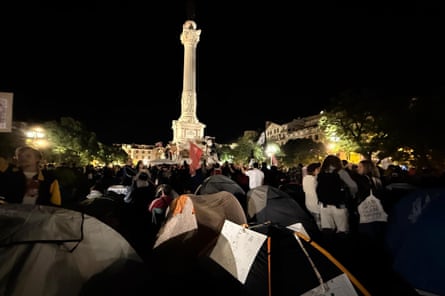
52 岁的工程师安东尼奥·马尔加多(Antonio Margado)批评中右翼政府“全面放开租金;业主受到越来越多的保护,而需要住房的租客受到的保护却越来越少”。
根据官方数据,2015 年至 2024 年间,葡萄牙房价上涨了 124%,增速约为欧盟平均水平的两倍。这一影响对年轻人和里斯本居民尤为严峻——葡萄牙 1100 多万人口中约四分之一生活在首都的大都市区。
周六在里斯本的营地扩大了一场始于北部城市波尔图的住房抗议,那里此前已经支起了数十顶帐篷。
在由主要工会 CGTP 早先在里斯本发起的抗议中,示威者呼吁改善公共服务、养老金和工资,并采取措施应对住房成本的飙升。
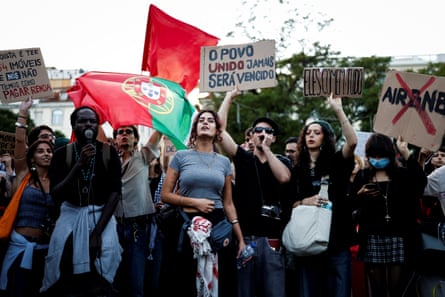
葡萄牙总理路易斯·蒙特内格罗(Luís Montenegro)表示,他的政府理解人们希望“表达他们对在他们看来可能是公共政策疏漏之处的愤怒”。但他警告政治对手不要“把事实上在葡萄牙社会毫无根基的不稳定与抗议气候引入葡萄牙”,这很可能暗指法国发生的暴力抗议。
本周阿尔巴尼亚也发生了暴力示威,示威者因大学条件和学费高涨而愤怒,要求该国总理埃迪·拉马(Edi Rama)辞职。
周六,抗议者向警察投掷石块、燃烧瓶、金属物品和烟火装置,并点燃汽车和垃圾桶,将其作为燃烧的街垒以阻止警察推进。
作为暴力升级的一个迹象,警方自抗议开始以来首次向示威者发射了橡皮子弹。抗议持续至夜间,包括法院、银行和邮局在内的建筑被纵火或严重损毁。
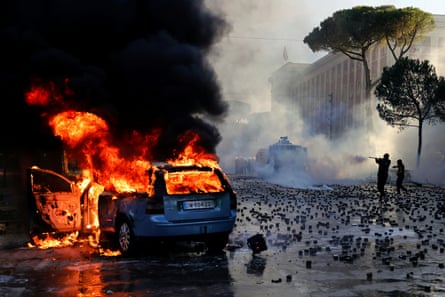
这场动荡紧随这个巴尔干国家长达数月的反政府抗议,最初由一项与美国总统唐纳德·特朗普(Donald Trump)家族有关的争议性度假村开发项目引发。
上月,在一名 87 岁老妇因无力支付收购其公寓的投资公司所要求的 230% 租金涨幅而被逐出家门后,西班牙对租金飙升和社会不平等的日益愤怒爆发了。
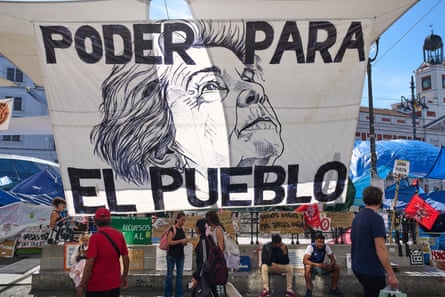
已故的玛丽亚·德尔·卡门·阿瓦斯卡尔(María del Carmen Abascal)的遭遇——以及它所体现的更广泛问题——引发了街头示威,并在西班牙首都中心建立起一个抗议营地,并促使由社会党领导的政府提议采取紧急措施以便利和保护住房获取。当右翼和极右翼政党在议会投票否决这些措施时,总理佩德罗·桑切斯(Pedro Sánchez)回应称,将宣布在 11 月底提前举行大选。
在法国,对巴黎北部贫困郊区学校教师缺勤和设施破旧的不满,已滚雪球般演变成一场全国性的运动,反对不平等、公共支出薄弱以及标准下滑。
周六,在支持高中生的抗议者与国家警察发生冲突后,法国逮捕了超过 1200 人,部分示威活动后来失控,建筑被点燃、商店遭劫掠。
美联社与法新社对本报道亦有贡献。
展开英文原文 · 与中文逐段对应
‘We are suffocating’: protests spread to Lisbon and Milan as housing and living cost tensions intensify
The angry protests that have convulsed Spain and France in recent weeks have spilled over to Italy and Portugal , with rioters clashing with police and setting property on fire in Milan, and a tent encampment springing up in Lisbon over the weekend.
A march in central Milan on Saturday to protest against rising living costs began peacefully but ended with masked rioters throwing stones, paving blocks and other objects at riot police and setting fire to barricades made from bar tables.
Police used water cannon and teargas to disperse the crowds, and images of the aftermath showed a severely damaged carabinieri car.
At least two police officers were injured and about 50 demonstrators, including many minors, were detained, the LaPresse news agency reported.
Italy’s prime minister, Giorgia Meloni, said that while demonstrating was a right, “setting our cities ablaze is not”. In a social media post, she said “hooligans” had exploited the protests “to sow chaos, attack those responsible for ensuring security and to hold entire cities hostage”.
Milan’s centre-left mayor, Giuseppe Sala, said that while “the reasons for the protests were understandable, the violence against law enforcement and serious damage to the city are not justifiable”.
In Lisbon, a tent camp reminiscent of the one established in Madrid three weeks ago was set up by protesters demanding action to tackle the housing crisis and living costs.
Hundreds of protesters rallied at night in Rossio Square – located in the bustling, touristic heart of the Portuguese capital – after a march that had drawn thousands of people nationwide.
The attenders vowed to stay overnight, with hundreds singing songs as they sat around the statue of King Pedro IV that dominates the square.
“The Portuguese social class that pays taxes, that which keeps this country going, is under attack and is losing its rights, notably its right to housing,” said Elena Costa, a 46-year-old social assistant. “So we are all here together to try to explain that we are suffocating.”
Antonio Margado, a 52-year-old engineer, criticised the centre-right government for “a total liberalisation of rents; owners are protected more and more, while tenants who need a house are those who are protected less and less”.
Portuguese housing prices rose by 124% between 2015 and 2024, roughly twice as fast as the EU average, according to official data. The impact is especially harsh on younger people and those in Lisbon – around a quarter of Portugal’s more than 11 million inhabitants live in the capital’s greater metropolitan area.
Saturday’s camp in Lisbon amplified a housing protest that started in the northern city of Porto, where dozens of tents had already been set up.
At the earlier protest in Lisbon called by the main CGTP union, demonstrators called for better public services, pensions and wages as well as measures against soaring housing costs.
Portugal’s prime minister, Luís Montenegro, has said his government understood that people wanted to “express their outrage at what, in their view, may be omissions in public policies”. But he has warned political rivals against “importing into Portugal climates of instability and protest that, in fact, have no support in Portuguese society”, in a likely reference to violent protests in France .
There have also been violent demonstrations in Albania this week , where demonstrators angry over university conditions and high tuition fees have demanded the resignation of the country’s prime minister, Edi Rama.
On Saturday, protesters threw rocks, molotov cocktails, metal objects and pyrotechnic devices at police, and torched cars and litter bins, using them as blazing barricades to stop police advancing.
In a sign of the escalating violence, police fired rubber bullets on the demonstrators for the first time since the protests began. The protests continued into the night, with buildings – including a court, banks and post office – set on fire or severely damaged.
The unrest follows months of anti-government protests in the Balkan nation, initially sparked by a controversial resort development linked to the family of the US president, Donald Trump.
Growing anger over soaring rents and social inequality boiled over in Spain last month after an 87-year-old woman was evicted from her home because she was unable to pay the 230% rent increase sought by the investment firm that had bought her flat.
The plight of the late María del Carmen Abascal – and the wider issue it embodied – led to street demonstrations and the creation of a protest camp in the middle of the Spanish capital , and spurred the socialist-led government to propose emergency measures to facilitate and protect access to housing. When rightwing and far-right parties voted down those measures in congress, the prime minister, Pedro Sánchez, responded by announcing a snap general election for the end of November.
In France, fury over teacher absences and shabby facilities in schools in the poor northern suburbs of Paris has snowballed into a nationwide movement against inequality, weak public spending and falling standards.
More than 1,200 people were arrested in France on Saturday after protesters supporting high school students clashed with police, with some demonstrations later spiralling out of control as buildings were set ablaze and shops looted.
The Associated Press and Agence France-Presse contributed to this report
查看本期独立摘要
中文独立摘要 · AI 整理
这件事
始于西班牙、法国的生活成本与住房抗议浪潮已蔓延至意大利和葡萄牙。米兰游行演变为蒙面者袭警、焚烧路障,约50名示威者被拘;里斯本罗西奥广场出现帐篷营地,民众要求应对住房危机。葡萄牙房价十年涨124%,法国、阿尔巴尼亚亦爆发暴力示威。
本页概括所列来源的重点,属于独立摘要;完整报道请阅读原站。整理时间:2026年10月19日 07:46(北京时间)。
信息从哪里来
综合《卫报》、美联社、法新社报道;各地伤亡与逮捕数据引述警方与通讯社。
- The Guardian 报道正文