巴西总统选举第二轮投票:左翼卢拉对决极右翼博索纳罗
Brazilians vote in presidential election runoff pitting leftist Lula against far-right Bolsonaro
The Guardian
以下为原文逐段中文翻译,保留图表与说明。AI 翻译并经 AI 对照复核,仍可能存在错误;核对数据和引用时请同时查看原文。译文发布:2026年10月26日 07:40(北京时间)。
巴西选民将于周日前往投票站,参加一场极难预料的第二轮投票。在这场选举中,左翼总统路易斯·伊纳西奥·卢拉·达席尔瓦正试图实现对极右翼参议员弗拉维奥·博索纳罗前所未有的翻盘——后者在首轮投票中获胜。
尽管在多数民调中并不领先,博索纳罗的意外胜出使他在三周前成为热门人选;但自此之后,卢拉的选情逐步走高,两人进入本轮对决时几乎势均力敌。
两人之间的差距是首轮投票中有史以来最小的一次,得票率相差不到2%。这位80岁的总统在第二轮竞选的大部分时间里都聚焦于投票率——首轮投票的弃权率创下历史新高,且对他的选民影响尤为严重——并不断渲染博索纳罗家族成员重新掌权可能带来的后果,引发人们的担忧。
现年45岁的博索纳罗担任国会议员已超过20年,但通过的法案寥寥无几。他是前总统雅伊尔·博索纳罗的长子。后者目前被软禁,因试图发动政变以推翻其2022年输给卢拉的败选结果,正在服27年刑期。
“我认为真正的变革时刻已经到来,”博索纳罗于周日上午在里约热内卢北区的学校投票后表示。“巴西无法再承受现状下这样的又一个四年……每个人的生活都变得更糟了。”
卢拉在圣贝尔纳多-杜坎普投票,这座工业城市是他近半个世纪前政治生涯起步的地方。他表示,在第二轮竞选期间席卷全国、支持他的左翼示威运动是“前所未见”的——其中许多是在年轻人中自发形成的。
“过去这几天人民为我所做的一切,是我永远无法回报的。这是如此多的慷慨、如此多的关爱、如此多的爱。我将永远心怀感激,”卢拉说,并补充称他“有信心”人民不会选择博索纳罗。
这位参议员承诺,若当选将赦免其父;随着一个更加保守的国会将于明年就职,他还誓言要“修改宪法,让这个国家重新民主化”,这让那些担心他可能步其父威权后尘的人不寒而栗。
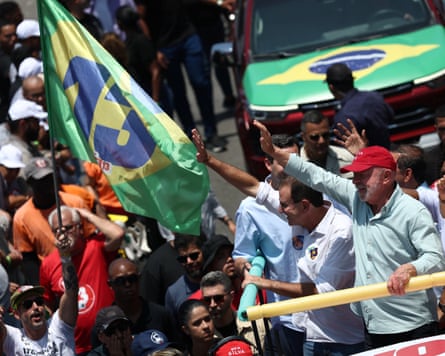
“我们正面对两个截然不同的国家蓝图,”63岁的选民、建筑师兼作家努诺·劳(Nuno Rau)说。“其中一个指向社会权利的终结乃至民主本身的终结;而另一方则是为收入分配和免费公共教育而奋斗的人。我或许对卢拉有所批评,但绝不可能选择博索纳罗,”他补充道。
62岁的律师阿帕雷西达·莫雷拉(Aparecida Moreira)将投票给博索纳罗,主要是因为他提出的“铁拳”安全政策,其中包括仿效萨尔瓦多民粹主义独裁者纳伊布·布克莱(Nayib Bukele)而建造五座“巨型监狱”。
“我赞同博索纳罗对强奸犯实施化学阉割的想法,因为没有比强奸更恶劣的罪行了,”莫雷拉说,并补充称投票给卢拉等同于投票给“独裁者”亚历山大·德莫赖斯(Alexandre de Moraes)——这位大法官尽管并非由卢拉任命,却因主持了对前总统的定罪,而被博索纳罗支持者普遍与卢拉联系在一起。
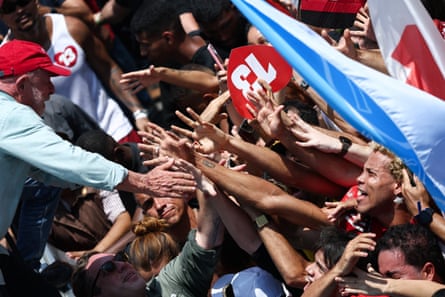
周六,弗拉维奥·博索纳罗和卢拉在里约热内卢、圣保罗和贝洛奥里藏特举行的最后竞选集会上,都吸引了大量人群。
在米纳斯吉拉斯州北部,来自卢拉政党的市议员伊阿拉·皮门特尔(Iara Pimentel)面部受伤,被迫送医。她所乘坐的车队遭到博索纳罗支持者投掷的玻璃瓶和砖块袭击。“人们因表达政治观点而遭到攻击,这是不可接受的,”皮门特尔出院后发帖称。

由于双方的支持者几乎都已“固化”,这场选举将由少数不认同任何一位候选人的选民决定。
博索纳罗在第二轮竞选开始时处于领先地位,并获得了大多数其他落败候选人的支持,但他在民调中并未扩大优势,反而陷入停滞。
许多分析人士认为,这是因为部分民众突然意识到博索纳罗重新掌权的“恐惧”,也与该参议员因涉嫌腐败和洗钱而正接受两项联邦警方调查等争议有关。
相比之下,卢拉彻底改变了他的数字策略,并受益于全国范围内由学生发起的抗议活动,其中大多数甚至与总统本人无关。
“在第一轮中,卢拉的竞选未能与民众建立联系,但如今推动他支持率增长的是公民社会运动,”政治学者赫尔西马拉·德索萨·特列斯(Helcimara de Souza Telles)说。
周六公布的最后民调显示,博索纳罗仍略微领先。
结果预计将于周日晚间晚些时候揭晓。无论结果如何,在这场拥有1.59亿选民的拉美最大国家的选举中,预计双方将以微弱差距决出胜负。
许多分析人士认为,如果卢拉扭转首轮败局,博索纳罗可能会效仿其父四年前的做法拒绝认输,而博索纳罗家族的长期盟友唐纳德·特朗普也可能拒绝承认这一结果。
“特朗普为了自身利益,想要‘殖民’整个拉丁美洲,”特列斯说,并补充称,自特朗普开启第二任期以来,拉丁美洲举行的七场总统选举全部由右翼候选人胜出,而巴西是该地区少数仍在抵抗这位美国总统的国家之一。
“因此,博索纳罗获胜将意味着巴西落入美国支持的独裁模式手中,”她补充道。
展开英文原文 · 与中文逐段对应
Brazilians vote in presidential election runoff pitting leftist Lula against far-right Bolsonaro
Brazilians are going to the polls on Sunday in a highly unpredictable runoff in which the leftist president, Luiz Inácio Lula da Silva , is attempting an unprecedented comeback against the far-right senator Flávio Bolsonaro , who won the first-round vote.
Bolsonaro’s surprise victory despite not leading most polls made him the favourite three weeks ago, but since then Lula’s campaign has gained ground, and the two go into the contest virtually tied.
The gap between them was the narrowest ever recorded in a first round, at less than 2% of the vote, and the 80-year-old president has spent much of the runoff campaign focused on turnout – abstention reached a record high in the first round and disproportionately affects his voters – and on stoking fears over what a return to power by a member of the Bolsonaro family could mean.
A congressman for more than 20 years with few bills passed, the 45-year-old Bolsonaro is the eldest son of the former president Jair Bolsonaro , who is under house arrest serving a 27-year sentence for attempting a coup to overturn his 2022 defeat to Lula.
“I think the time has come for real change,” said Bolsonaro after voting on Sunday morning at a school in Rio de Janeiro’s north zone. “Brazil can’t take another four years the way things are ... Everyone’s life has got worse.”
Lula voted in São Bernardo do Campo, the industrial city where his political career began nearly half a century ago, and said he had “never seen anything like” the leftist demonstrations – many emerging organically among young people – that swept the country in support of him during the runoff.
“What the people have done for me in these past few days is something I can never repay. It is so much generosity, so much affection, so much love. I will be eternally grateful,” said Lula, adding that he was “confident” the people would not choose Bolsonaro.
The senator has promised that if elected he will pardon his father, and with an even more conservative congress taking office next year, he has vowed to “change the constitution and re-democratise this country”, sending chills through those who fear he could follow in his father’s authoritarian footsteps.
“We’re facing two completely different projects for the country,” said voter Nuno Rau, 63, an architect and writer. “One points towards the end of social rights and the end of democracy itself; on the other side is someone who fought for income distribution and free public education. I may have criticisms of Lula, but there is no way to choose Bolsonaro,” he added.
Aparecida Moreira, a 62-year-old lawyer, will vote for Bolsonaro mainly because of the “iron fist” security policy he proposes, including building five “mega-prisons” inspired by those of El Salvador’s populist autocrat Nayib Bukele.
“I agree with Bolsonaro’s idea of chemical castration for rapists, because there is no crime worse than rape,” said Moreira, adding that voting for Lula would be the same as voting for the “dictator” Alexandre de Moraes , the justice who, despite not having been appointed by Lula, is widely associated with him by Bolsonaro supporters because he oversaw the former president’s conviction.
Both Flávio Bolsonaro and Lula drew large crowds to their final campaign rallies on Saturday in Rio de Janeiro, São Paulo and Belo Horizonte.
In northern Minas Gerais state, Iara Pimentel, a councillor from Lula’s party, suffered facial injuries and had to be taken to hospital after the motorcade in which she was travelling was hit by glass bottles and bricks thrown by Bolsonaro supporters. “It is unacceptable for people to be attacked for expressing their political views,” Pimentel posted after leaving hospital.
With each side of supporters virtually “crystallised”, the election will be decided by the small number of voters who identify with neither candidate.
Bolsonaro began the runoff campaign with a lead and the support of most other defeated candidates, but instead of growing, he stagnated in the polls.
Many analysts saw this as the result of part of the population suddenly waking up to the “fear” of a Bolsonaro returning to power, as well as controversies including the fact that the senator is under investigation in two federal police inquiries over alleged corruption and money laundering.
Lula, by contrast, radically changed his digital strategy and benefited from student-led protests across the country, most of which did not even involve the president.
“In the first round, Lula’s campaign failed to connect with the population, but now it has been civil society movements that have driven his growth,” said the political scientist Helcimara de Souza Telles.
The final polls published on Saturday showed Bolsonaro still slightly ahead .
The result is expected late Sunday evening, and whatever the outcome, the race is expected to be decided by a narrow margin in Latin America’s largest country, with an electorate of 159 million.
Many analysts believe that if Lula overturns his first-round defeat, Bolsonaro could follow his father’s example from four years ago and refuse to concede, and that Donald Trump, a longstanding ally of the Bolsonaro clan, could refuse to recognise the result.
“Trump wants to ‘colonise’ all of Latin America in pursuit of its own interests,” said Telles, adding that, with rightwing candidates having won all seven presidential elections held in Latin America since Trump began his second term, Brazil is one of the few countries in the region still offering any resistance to the US president.
“So a Bolsonaro victory would mean losing Brazil to a model of autocracy backed by the US,” she added.
查看本期独立摘要
中文独立摘要 · AI 整理
这件事
巴西于周日举行高度不确定的总统选举第二轮,左翼总统卢拉试图史无前例地卷土重来,对阵极右翼前总统之子、参议员弗拉维奥·博索纳罗。首轮两人差距不足2%,最终投票率与少数摇摆选民将决定胜负。分析人士担忧若卢拉翻盘,博索纳罗可能效仿其父拒绝认输。
本页概括所列来源的重点,属于独立摘要;完整报道请阅读原站。整理时间:2026年10月26日 07:41(北京时间)。
信息从哪里来
据The Guardian报道,由本站译为全文中文。
- The Guardian 报道正文