“你怎么解释删除1.3亿个名字?”:为何印度选民走上街头
‘How do you explain the deletion of 130 million names?’: why Indian voters are on the streets
以下为原文逐段中文翻译,保留图表与说明。AI 翻译并经 AI 对照复核,仍可能存在错误;核对数据和引用时请同时查看原文。译文发布:2026年10月17日 06:30(北京时间)。
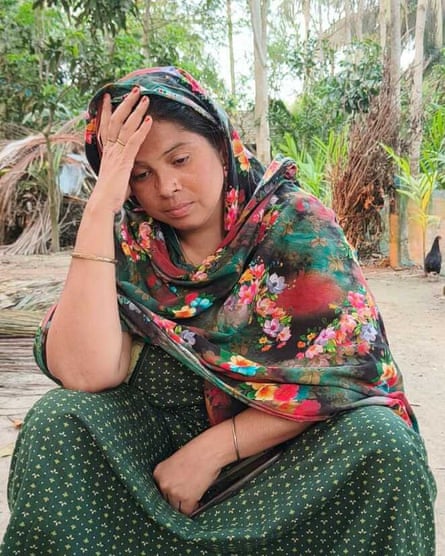
沙希达·法基尔(Shahida Fakir)出生在西孟加拉邦的一个小村庄,她一直把投票权视为理所当然。直到它突然被剥夺。她向官员出示了自己的印度出生证明和该村可追溯至1962年的家庭土地文件。
她的父母数十年来都在选民名册上,所以她也出示了这方面的证明。但当4月最终修订后的选民名单公布时,法基尔却不在上面。
这位出生在贫困穆斯林家庭的38岁移民工人并非个例。自去年以来,1.3亿个名字——比日本人口还多——通过一个名为 SIR(特别强化修订)的程序从印度选民名册中被删除。在印度独立以来的近八十年里,选民名册从未在如此短的时间内缩减如此巨大的数量。
纳伦德拉·莫迪(Narendra Modi)政府称 SIR 是一项清理选民名册的正当举措。在选举委员会的监督下,数千万已故和重复的名字已被删除。然而,数百万在世印度公民的名字也被删除了。
批评者指称,这项“净化”印度选民名册、清除非法移民的承诺,反而被用于更险恶的目的——剥夺数千万穆斯林、其他少数群体以及贫困和低种姓群体的选举权,而这些人在很大程度上不是印人党(BJP)的选民。
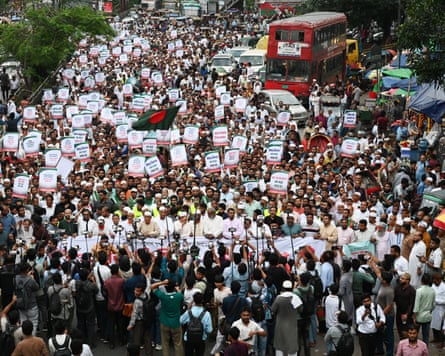
在数周之内,全国对 SIR 的愤怒沸腾并蔓延到印度最大城市的街头,对政府构成严峻挑战。上周末,德里变成了一座由路障、道路封锁和数万名警察与准军事部队组成的高安全堡垒,他们拘留了数千人,试图阻止以青年为主导的、要求监督 SIR 的选举委员会首席专员贾内什·库马尔(Gyanesh Kumar)立即下台的抗议活动。
周一,反对党——他们谴责 SIR 是莫迪政府“窃取选票的武器”——在穿越首都游行时吸引了数万名支持者,并向最高法院提交了一份请愿书,要求库马尔辞职。以青年为主导的“蟑螂人民党”(Cockroach Janta party, CJP)运动是周六行动号召的幕后推手,他们誓言在反对 SIR 的抗议中“继续斗争”。
反对派和公民社会领袖指称,SIR 已经在比哈尔邦和西孟加拉邦等邦给了印人党选举优势,该党否认了这一说法。其他人则表示,这一举措带来了更令人担忧的影响:在库马尔单方面实施的 SIR 变更下,选举委员会已成为印度公民身份的裁决者,这是对其职权范围的全面越权。
后果已在西孟加拉邦显现,莫迪的印度人民党(BJP)最近在那里上台,并开始打击“非法”移民,还新建了几个拘留中心。公民社会团体表示,被 SIR 排除在外的穆斯林正成为目标。
法基尔就是其中之一。选民名单公布仅三个月后——而她挑战自己被排除在外的听证仍待审理时——她就被警方带走,并被指控为非法孟加拉国移民。
7月,她被推过边境,送到孟加拉国——一个她从未去过、也没有任何联系的国家,并一直困在那里。“我有所有文件证明我是印度公民,”她在从她一直栖身的孟加拉国边境村庄打来的含泪电话中说。“我跪倒在他们的脚下,乞求警察不要把我送到孟加拉国,但他们把我推过了边境。”
一名孟加拉国边防官员证实了法基尔的说法。“我们检查了她所有的文件,确信她是印度公民,”他们说。9月,她的家人向最高法院提交了一份请愿书,质疑对她的驱逐。印度政府被给予一个月时间作出回应。
“我只想回到我在印度的家人和家。我绝望地等待着那一天,”她说。西孟加拉邦数百万挑战自己被排除在外的选民积压的案件,意味着法基尔的案件可能要等数年才能审理。
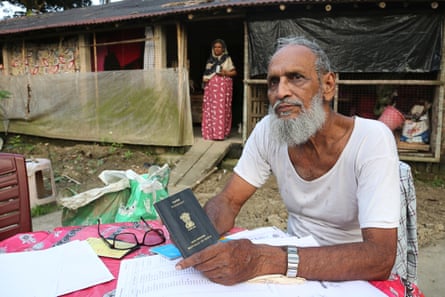
西孟加拉邦那些被剥夺投票权的人,谈到他们对自己被指控为这片土地上的外人而感到的恐惧。有些人的福利被取消了。来自北24帕尔加纳斯(North 24 Parganas)区、80岁的穆罕默德·赫达耶特·乌拉·西迪基(Mohammad Hedayet Ullah Siddiqui)说,他的祖父曾是争取印度独立的自由战士,他家三代人都在选民名册上。然而在 SIR 之后,西迪基描述了他发现自己的名字消失时的“屈辱”。
“我的名字从选民名单上被抹去,我时刻生活在恐惧中。万一他们把我送到拘留营怎么办?”他说。“在这个年纪,我无法忍受想到与我的儿女和孙辈分离,尤其是当我所有的祖先都葬在印度时。”
批评者说,问题始于2023年,当时莫迪政府改变了三人选举委员会的任命程序,首次将多数控制权交给政府。在几个月内,莫迪领导的小组不顾反对派的反对,任命库马尔为选举委员。
“几十年来,选举委员会是我们较为可信、独立的机构之一,但现在这已被侵蚀,”新加坡国立大学南亚研究项目高级研究员罗诺乔伊·森(Ronojoy Sen)说。
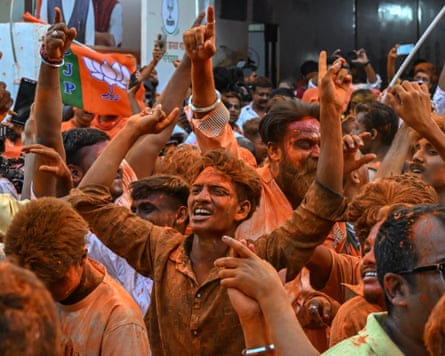
到第二年,新的选举委员会机构已经开始 SIR,从比哈尔邦开始,那里在超过600万个名字被删除后,立即引发了人权团体的担忧。修订后不久,印人党在比哈尔邦选举中大获全胜。
尽管围绕 SIR 的担忧持续了数月,但直到《印度快报》(Indian Express)上个月披露,选举委员会的两名成员对选民被排除出名册的方式提出了14项异议,但都被库马尔单方面否决,这才引发了全国性抗议。
“印度一直是一个有缺陷的民主国家,但至少公民觉得自己有投票权,选举是定期和公平的,”森说。“SIR 剥夺了这一权利。从它的实施方式来看,很难看出其动机除了提升印人党的选举前景之外还有什么。”
三位前选举委员公开批评 SIR 是一场“敌对行动”,它把重点放在排除——而非纳入——选民上,从而损害了该国选民名册的神圣性。前首席选举委员 OP·拉瓦特(OP Rawat)将选民登记表的变更描述为“错误且非法”。
在2018年至2020年间担任选举委员的阿肖克·拉瓦萨(Ashok Lavasa)呼吁废除 SIR。“一项不公平的程序被强加给这个国家的数百万人,而你却有一个司法机构为之背书,”他上个月说。“你怎么解释删除1.3亿个名字?”
没有人比2010年至2012年间担任首席选举委员的SY·库雷希(SY Qureshi)的反对更为激烈。“这是一场旨在把穆斯林赶出选民名册的全国性骚扰行动,”他声称。“恢复印度选举公信力的唯一办法,就是恢复那些被删除的选民。”
印人党否认在 SIR 过程中有任何政治参与或动机,指责反对党国大党对其近期的选举胜利“嫉妒”,并表示任何被删除的选民都可以简单地重新登记。印人党发言人苏丹舒·特里维迪(Sudhanshu Trivedi)说,这些指控是“虚假信息”,是反对派“被策划用来制造分裂和无政府状态氛围”的竞选活动的一部分。
尽管如此,选举委员会似乎已接受了这一过程中的一些缺陷。上周末,在对合法穆斯林选民提交数千份表格的事件发生后,它迟来地对选民删除表格的数量设定了上限——这类表格允许人们代表他人提交异议。
与此同时,公众的愤怒持续升温。在德里,SIR 举措让数百万人未进入初步名单,预计本周抗议将继续。
在德里居住30年、现年60岁的普拉尚特·坦登(Prashant Tandon)说,当一张通知送到他家门口、质疑他作为选民的生活时,他简直不敢相信。“如果有人怀疑我的公民身份,他们应该拿出对我不利的证据,”他愤怒地说,并补充说他将与年轻人一起抗议。“我不应该必须证明我是印度公民。”
补充报道:阿卡什·哈桑(Aakash Hassan)
展开英文原文 · 与中文逐段对应
‘How do you explain the deletion of 130 million names?’: why Indian voters are on the streets
B orn into a small village in West Bengal, Shahida Fakir had always taken her vote for granted. That was, until it was suddenly taken away. She presented officials with her Indian birth certificate and family land documents from the village going back to 1962.
Both her parents had been on the electoral roll going back decades, so she showed proof of that too. But when the final revised voter list came out in April, Fakir was not on it.
The 38-year-old migrant worker, born into a poor Muslim family, was not alone. Since last year, 130 million names – more than the population of Japan – have been removed from India’s electoral roll through a process known as SIR, or special intensive revision. In the nearly eight decades since India’s independence, never have the voter rolls shrunk by such a huge amount over such a short time.
The Narendra Modi government has called SIR a legitimate exercise to clean up the electoral rolls. Overseen by the election commission, tens of millions of dead and duplicate names have been removed. Yet so have the names of millions of living Indian citizens .
Critics allege that the pledge to “purify” India’s voter roll of illegal immigrants has instead been used for more sinister purposes – disenfranchising tens of millions of Muslims, other minorities, and poor and lower caste communities, who are largely not BJP voters.
In a matter of weeks, nationwide anger at SIR has boiled up and spilled out on to the streets of India’s biggest cities, presenting a formidable challenge to the government. Over the weekend, Delhi was transformed into a high-security fortress of barricades, roadblocks and tens of thousands of police and paramilitaries who detained thousands of people , as they attempted to stop youth-led protests calling for the man who oversaw SIR, the chief election commissioner, Gyanesh Kumar, to step down immediately.
On Monday, opposition parties – who have decried SIR as a “weapon for vote theft” by the Modi government – drew tens of thousands of supporters as they marched through the capital and presented a petition to the supreme court, demanding Kumar’s resignation. The youth-led Cockroach Janta party (CJP) movement, who were behind the call for Saturday’s action, have vowed to “fight on” in their protests against SIR.
Opposition and civil society leaders allege that SIR has already given the BJP an electoral advantage in states such as Bihar and West Bengal, claims the party denied. Others say the exercise has had even more concerning implications: under changes to SIR unilaterally implemented by Kumar, the election commission has become the arbiter of Indian citizenship, a sweeping overreach of its remit.
The consequences are already playing out in West Bengal, where Modi’s Bharatiya Janata party (BJP) recently came to power and began a crackdown on “illegal” immigrants, complete with several new detention centres. Civil society groups say Muslims excluded by SIR are being targeted.
Fakir was among them. Just three months after the voter list was published – and while her hearing to challenge her exclusion was pending – she was picked up by police and accused of being an illegal Bangladeshi immigrant.
In July she was pushed over the border to Bangladesh, a country she had never been to nor had any connection with, and remains stuck there. “I have all the documents to prove I am an Indian citizen,” she said in a tearful phone call from the Bangladesh border village where she has been sheltering. “I fell on their feet and begged the police not to send me to Bangladesh but they pushed me over the border.”
A Bangladesh border guard officer confirmed Fakir’s account. “We checked all her documents and are convinced that she is an Indian citizen,” they said. In September, her family submitted a petition to the supreme court challenging her deportation. The Indian government was given a month to respond.
“All I want is to return to my family and my home in India. I am waiting desperately for that day,” she said. The backlog of millions of voters in West Bengal challenging their exclusion means it could be years before Fakir’s case is heard.
Those across West Bengal who have been stripped of their votes speak of their terror of being accused of being an alien in their own land. Some have had benefits taken away. Mohammad Hedayet Ullah Siddiqui, 80, from the North 24 Parganas district, said his grandfather had been a freedom fighter for Indian independence and three generations of his family were on the voter rolls. Yet after SIR, Siddiqui described his “humiliation” on finding his name gone.
“With my name erased from the voter list, I am in constant terror. What if they send me to a detention camp?” he said. “I cannot bear to think about being separated from my children and grandchildren at this age, especially when all my ancestors have been buried in India.”
Critics say the problems began in 2023, when the Modi government changed the process for appointing the three-body election commission, giving majority control to the government for the first time. Within a matter of months, the Modi-led panel had appointed Kumar as the election commissioner in spite of opposition objections.
“For decades, the election commission was one of our more credible, independent bodies, but now that has been eroded,” said Ronojoy Sen, a senior fellow at the South Asian Studies Programme, National University of Singapore.
By the following year, the new election commission body had begun SIR, starting in Bihar, where it immediately raised concerns among human rights groups after more than 6 million names were removed. Not long after the revisions, the BJP won a landslide victory in the Bihar state elections.
Despite concerns over SIR rumbling on for months, it did not spark national protests until the Indian Express newspaper last month revealed that two members of the election commission had raised 14 objections to how voters were being excluded from the rolls, but they were unilaterally overruled by Kumar.
“India has always been a flawed democracy but at least citizens felt they had the right to vote and that elections were regular and fair,” said Sen. “SIR has taken away that right. From how it has been conducted, it’s difficult to see how the motive was anything other than to enhance the election prospects of the BJP.”
Three former election commissioners have openly criticised SIR as a “hostile exercise” that has undermined the sanctity of the country’s electoral rolls by focusing on the exclusion – rather than inclusion – of voters. OP Rawat, a former chief election commissioner, described changes to the voter registration form as “wrong and illegal”.
Ashok Lavasa, who was an election commissioner between 2018 and 2020, called for the SIR to be scrapped. “An unfair procedure has been imposed on millions of people in the country, and you have the judiciary which has validated that,” he said last month. “How do you explain the deletion of 130 million names?”
None have been more vehement in their opposition than SY Qureshi, who was chief election commissioner between 2010 and 2012. “This is a national harassment exercise designed to throw Muslims off the electoral roll,” he claimed. “The only way to restore the credibility of India’s elections is to restore those deleted voters.”
The BJP has denied any political involvement or motive in the SIR process, accusing the opposition Congress party of “jealousy” over its recent electoral victories and saying any deleted voters can simply re-enrol. The BJP spokesperson Sudhanshu Trivedi said the allegations were “disinformation” and part of an opposition campaign “being orchestrated to create an atmosphere of division and anarchy”.
Nonetheless, the election commission has appeared to accept some flaws in the process. Late last week, it belatedly put a cap on the number of voter deletion forms – which allow people to submit objections on behalf of others – after incidents in which people submitted thousands of forms targeting legitimate Muslim voters.
Public anger, meanwhile, has continued to build. In Delhi, where the SIR exercise left millions of people off the draft list , protests are expected to continue this week.
A Delhi resident for 30 years, Prashant Tandon, 60, said he could not believe it when a notice came to his door, questioning his life as a voter. “If someone doubts my citizenship, they should produce evidence against me,” he said furiously, adding that he would be protesting alongside the young people. “I should not have to prove that I am an Indian citizen.”
Additional reporting Aakash Hassan
查看本期独立摘要
中文独立摘要 · AI 整理
这件事
据《卫报》报道,来自西孟加拉邦一个小村庄的38岁移民工人沙希达·法基尔原本一直视投票权为理所当然,却在今年4月修订后的最终选民名册公布时发现自己不在其中——她出示了印度出生证明、可追溯至1962年的家庭土地文件以及父母数十年的选民登记记录,仍无济于事。报道称,自去年以来,印度选民名册通过名为SIR(特别强化修订)的程序删除了1.3亿个名字,超过日本全国人口,这是印度独立近80年来选民名册在如此短时间内出现的最大幅度缩水。莫迪政府称SIR是合法的操作。
本页概括所列来源的重点,属于独立摘要;完整报道请阅读原站。整理时间:2026年10月17日 04:44(北京时间)。
信息从哪里来
依据 The Guardian 的RSS 摘要与原文节选整理,事实核对限于列明材料;不是原文全文翻译。
- The Guardian 来源报道(RSS 摘要与原文节选)