战争把油价高位推进2027年:布伦特2027年1月合约突破102美元
Oil Prices Stay High as War Keeps Supply Tight Into 2027 | OilPrice.com
OilPrice.com
以下为原文逐段中文翻译,保留图表与说明。AI 翻译并经 AI 对照复核,仍可能存在错误;核对数据和引用时请同时查看原文。译文发布:2026年10月18日 17:27(北京时间)。
在美以对伊朗开战的头三个月左右,石油市场的主导情绪是冲突随时会结束。6 月短暂的停火强化了这种乐观,因此市场又过了一段时间才不得不面对事实:战争不会随时结束。它甚至可能延续到明年——而这意味着油价将在更长时间里保持高位。
ICE 布伦特原油 2027 年 1 月期货合约目前报每桶 102.59 美元;6 月合约略低,为 92.71 美元;12 月合约报 84.75 美元。作为参照,2025 年 12 月布伦特原油还在 70 美元下方。今年 3 月,多数石油市场观察者和参与者似乎还预期价格会迅速从战争推高的高位回落。如今,用油一方似乎预计供应将保持紧张,并在以更高的价格对冲未来的消费。
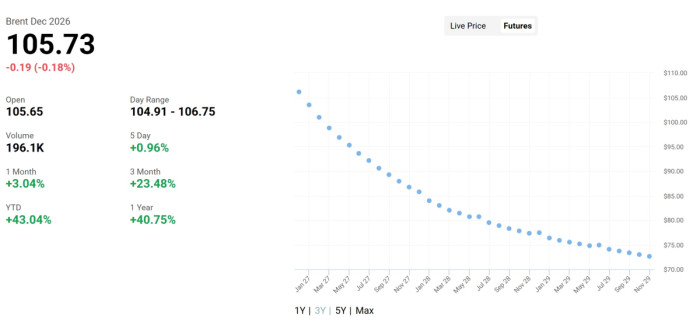
即便是关于波斯湾石油外流已恢复甚至超过战前水平的多篇报道,也没能让价格持续回落。首先,市场对官方数据存在信任危机;其次,流量的恢复依赖船对船过驳这类成本高昂的操作,这挤压了油轮市场、推高运费,并迫使海湾生产商对原油打折以维持需求。与此同时,伊朗几乎每天都在霍尔木兹海峡袭击油轮。石油上的战争溢价依然牢牢存在。
在成品油方面,形势更具挑战,尤其是柴油。那些报道霍尔木兹石油外流几近完全恢复的渠道,没有带来燃料流量的同样消息,因为中东有太多炼油厂成为伊朗报复性打击的目标。全球燃料供应日益紧张。
国际能源署(IEA)本周表示,将开始释放超过 2000 万桶柴油库存,以帮助填补已将价格推至历史高位的供应缺口。柴油释放总量可能达到 5000 万桶,相当于 IEA 成员国本月早些时候在特朗普关税压力下同意释放的总库存的一半。库存释放的问题在于,它迟早会耗尽——而补充将十分困难,因为这个世界坦率地说,缺少炼能。
尽管如此,IEA 似乎仍认为美国、以色列与伊朗之间的和平只是时间问题。事实上,该机构在最新月度石油报告中预计,全球石油供应将从今年的不足每日 1.01 亿桶反弹至 1.083 亿桶/日。这意味着增幅超过每日 700 万桶——同时也意味着中东的石油外流实际上并未恢复到战前水平,更不用说 LNG 了。
所有这些意味着,能源商品高成本驱动的通胀压力,将在比最初预期更长的时间里继续压制全球经济。各国央行已经紧张起来,政府也一样。应对此类局面的选项有限,其中大多数都涉及把纳税人的钱花在加油站的临时补贴上。然而,这不可能永远持续下去,在经济停滞甚至衰退的状态下尤其不可能持续太久。
目前,官方的全球经济增长预测看起来相当乐观。国际货币基金组织(IMF)本周早些时候表示,凭借韧性,明年全球经济有望增长 3.4%。不过,该机构首席经济学家警告说:“全球经济一直很有韧性,但这种韧性正在触及极限,因此我们需要从单纯应对转向重建。我们需要恢复财政空间,需要重建供应侧的韧性,”西尔瓦娜·特雷罗说。
然而,重建通常始于敌对行动结束之后——而中东(以及俄罗斯和乌克兰)的敌对行动远未结束,两者的前景都不确定。眼下,世界似乎需要继续“应对”而非“重建”,并在可预见的未来习惯全面上涨的能源成本——涨得多得多。ICE 低硫柴油 11 月合约目前报每吨 1404 美元以上;2027 年 12 月合约报每吨 1001 美元。石油和天然气不会在几天甚至几周内恢复正常。
OilPrice.com 的伊琳娜·斯拉夫
OilPrice.com 更多热门阅读
- 中国充足的天然气库存或缓解冬季供应担忧
- 数据中心推动印度可再生电力需求激增
- 伊朗战争料将中石油交易利润推至创纪录的 30 亿美元
展开英文原文 · 与中文逐段对应
Oil Prices Stay High as War Keeps Supply Tight Into 2027 | OilPrice.com
During the first three months or so of the U.S. and Israeli war with Iran, the dominant mood on oil markets was that the conflict would end any day now. The brief June ceasefire reinforced that optimism, so it took a while longer for facts to be faced: the war would not end any day now. It might even extend into next year—and this means higher prices for a longer time.
The ICE Brent crude futures contract for January 2027 is trading at $102.59 per barrel. The June 2027 contract is only slightly lower, at $92.71 per barrel, and the December 2027 contract is trading at $84.75 per barrel. For context, in December 2025, Brent crude was trading at less than $70 per barrel. Back in March, most oil market observers and players seemed to expect prices to retreat from their war-fueled highs fast. Now, those who use oil seem to expect supply to remain tight, and they are hedging their future consumption at higher prices.
Even the multiple reports of oil flows out of the Persian Gulf recovering to pre-war levels—and even topping pre-war levels—did not help bring prices down for very long. That is, first, because there is a crisis of trust in the official figures reported, and second, because the recovery in flows, such as it is, depends on costly maneuvers such as ship-to-ship transfers that have tightened the tanker market, led to surging freight costs, and forced Gulf producers to discount their crude to keep demand steady. Meanwhile, Iran is striking tankers in the Strait of Hormuz on an almost daily basis. The war premium on oil remains very much in place.
In refined fuels, the situation is even more challenging, especially in diesel. Those outlets that reported the almost total recovery in oil flows out of Hormuz did not have the same news about fuel flows, because so many refineries in the Middle East became targets in Iran’s retaliatory strikes. The world’s fuel supply is tight and getting tighter by the day.
The International Energy Agency said this week it will begin releasing more than 20 million barrels of diesel from collective inventory to help fill the supply gap that has pushed prices to all-time highs. The total diesel release could reach 50 million barrels, or half of the total inventory release IEA members agreed earlier this month under tariff pressure from President Trump. The problem with inventory releases is that sooner or later they will run out—and replenishment will be difficult because the world is, quite plainly, short on refining capacity.
Despite these developments, the IEA appears to still believe peace between the United States, Israel, and Iran, is only a matter of time. Indeed, the agency said in its latest monthly oil report it expected global oil supply to rebound to 108.3 million barrels daily, from less than 101 million barrels daily this year. This would mean an increase of over 7 million barrels daily—and this would mean that oil flows out of the Middle East have not, in fact, recovered to pre-war levels, not to mention LNG flows.
All this means that inflationary pressures driven by the high cost of energy commodities would continue to weigh on the global economy for a longer period than initially hoped. Central bankers are already getting nervous, and so are governments. There is only a limited number of options of how to handle such a situation, and most of them involve spending tax money on temporary relief at the pump. That, however, cannot continue forever, and it especially cannot continue for very long in a state of economic stagnation or even recession.
For now, official global economic growth forecasts appear upbeat. The International Monetary Fund earlier this week said the global economy could expand by a pretty decent 3.4% next year thanks to its resilience. However, the lender’s chief economist warned that “The global economy has been resilient, but that resilience is reaching its limits, so we need to move from just coping to rebuilding. We need to restore fiscal space. We need to rebuild supply-side resilience,” Silvana Tenreyro said.
However, rebuilding normally begins once the hostilities are over, and the hostilities in the Middle East—and Russia and Ukraine, for that matter—are very much ongoing, and the outlook is uncertain for both. It seems that for now, the world will need to continue coping rather than rebuilding, and get used to costlier energy across the board for the observable future—much costlier. The ICE low-sulfur gasoil futures contract for November is trading at over $1,404 per ton. The contract for December 2027 is trading at $1,001 per ton. Things in oil and gas are not coming back to normal in a few days, not even in a few weeks.
By Irina Slav for Oilprice.com
More Top Reads From Oilprice.com
- China’s Sufficient Gas Stocks Could Ease Winter Supply Concerns
- Data Centers Drive Surge in India’s Renewable Power Demand
- Iran War Set To Push PetroChina’s Trading Profit to Record $3 Billion
查看本期独立摘要
中文独立摘要 · AI 整理
这件事
OilPrice 分析指出,美以对伊朗开战三个多月来,市场最初的很快结束预期已落空,原油价格正把战争溢价带进 2027 年。ICE 布伦特 2027 年 1 月合约报 102.59 美元/桶,12 月合约 84.75 美元,而 2025 年 12 月布伦特还在 70 美元下方。尽管多方报道称波斯湾石油外流已恢复甚至超过战前水平,但市场不信任官方数据,且恢复依赖成本高昂的船对船过驳,推高油轮运费;伊朗几乎每天袭击霍尔木兹海峡油轮。成品油更紧张:IEA 本周起释放超 2000 万桶柴油,总量或达 5000 万桶,但全球炼能缺口决定库存释放早晚耗尽。文章认为能源成本高企带来的通胀压力将长期压制全球经济,政府补贴无法永远持续。
本页概括所列来源的重点,属于独立摘要;完整报道请阅读原站。整理时间:2026年10月18日 17:31(北京时间)。
信息从哪里来
依据 OilPrice.com 分析文章。
- OilPrice.com 分析正文