NASA与SpaceX的第35次商业补给任务概览 - NASA
NASA’s SpaceX 35th Commercial Resupply Mission Overview - NASA
NASA;保留逐图 NASA 署名。AI 中文翻译,非官方译本。
以下为原文逐段中文翻译,保留图表与说明。AI 翻译并经 AI 对照复核,仍可能存在错误;核对数据和引用时请同时查看原文。译文发布:2026年10月8日 11:31(北京时间)。
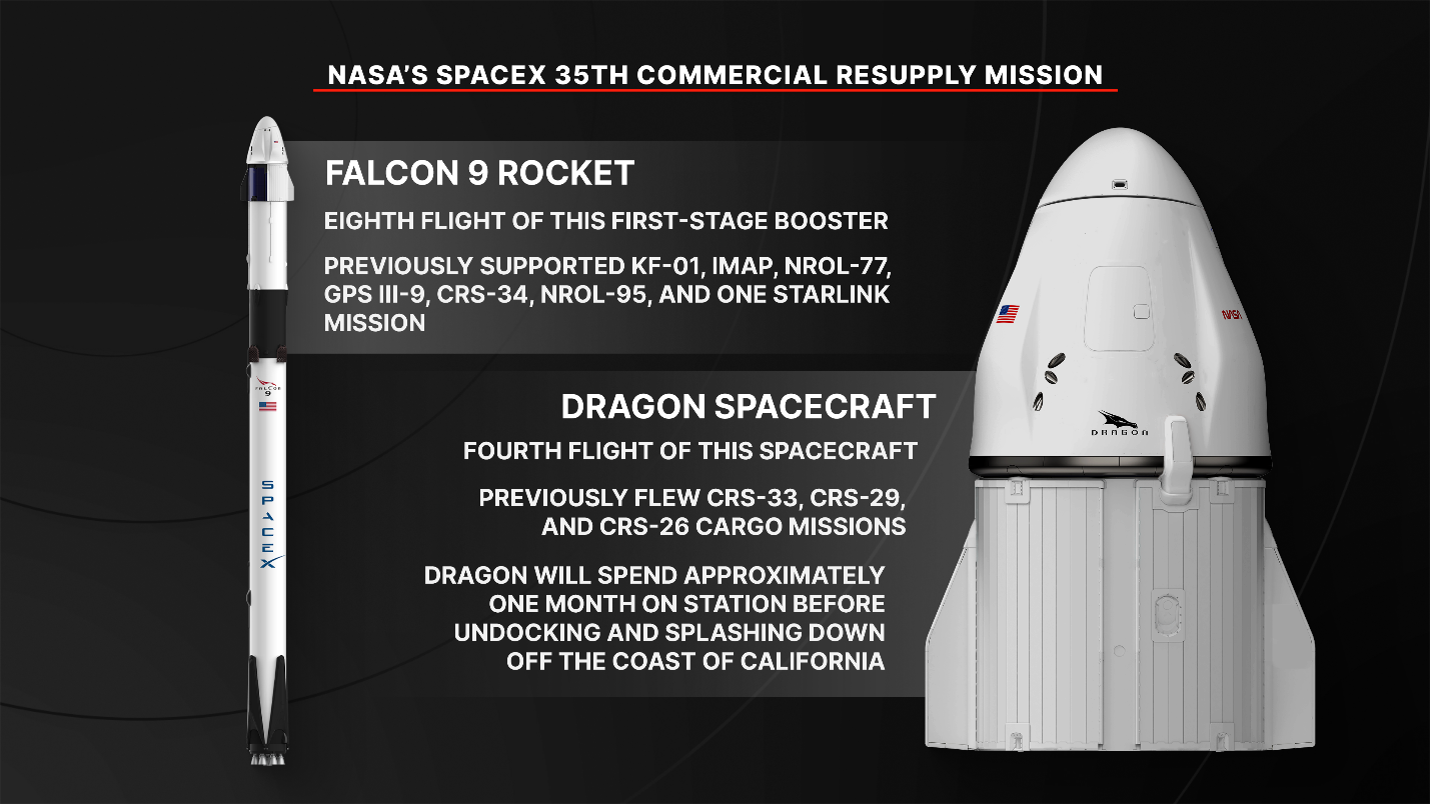
NASA和SpaceX计划最早于10月13日(星期二)发射,将科学实验项目、补给和设备送往国际空间站。
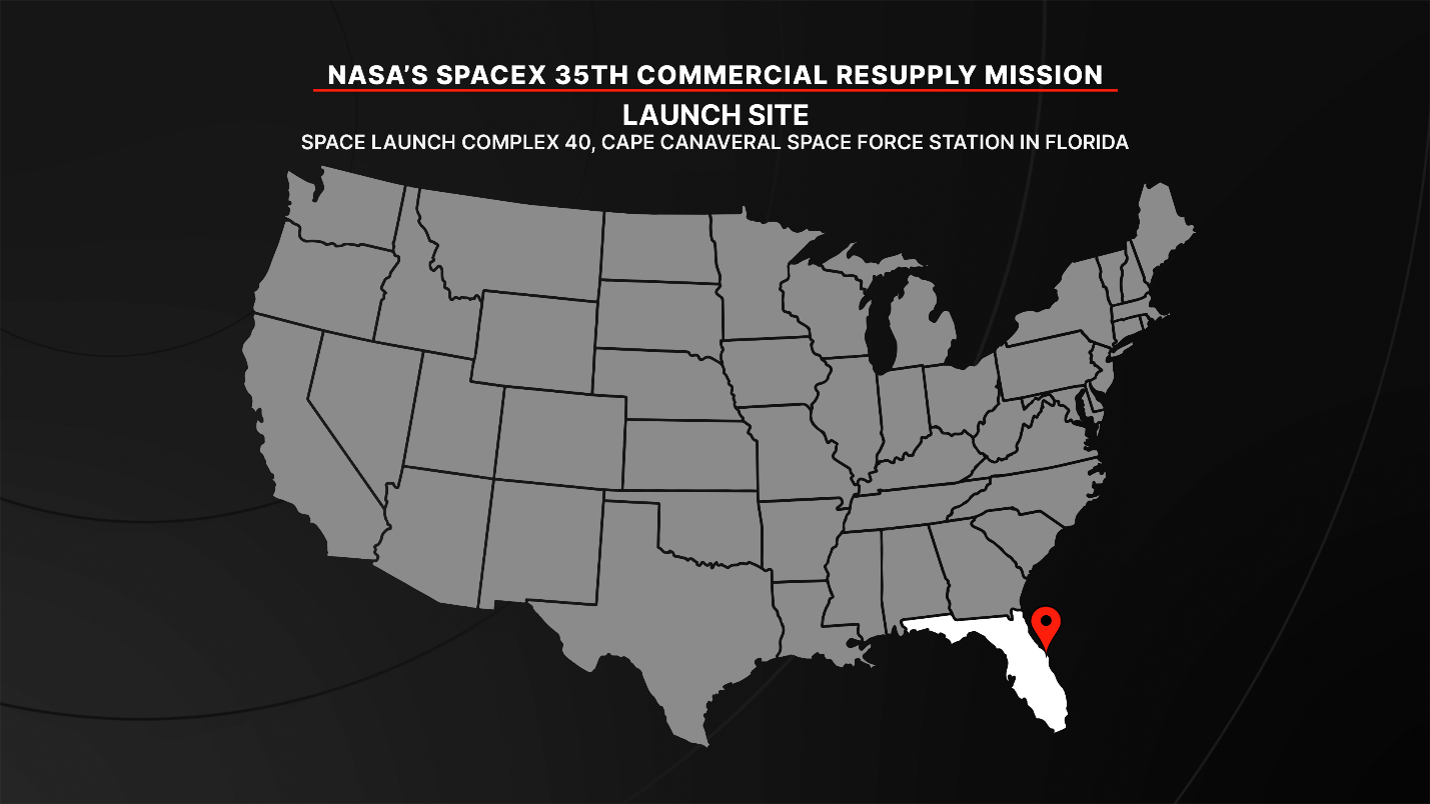
SpaceX的“龙”飞船将装载超过6,300磅的补给物资,搭乘该公司的“猎鹰9号”火箭,从佛罗里达州卡纳维拉尔角太空军基地的40号航天发射场升空。抵达空间站后,“龙”飞船将自主对接到空间站“和谐”号节点舱面向太空的对接口。
NASA将通过多个平台直播发射和对接过程。线上观看渠道请见:
https://www.nasa.gov/live
25年多来,国际空间站为来自110多个国家的科学家开展研究提供了支持,使4,000多项微重力实验得以进行。在空间站上开展的研究有助于推进“阿耳忒弥斯”计划中的长期月球任务以及长期火星任务,同时也为人类带来多方面的益处。
科研亮点
除了为空间站乘组运送物资,“龙”飞船还将运送数项新的科学实验,包括:
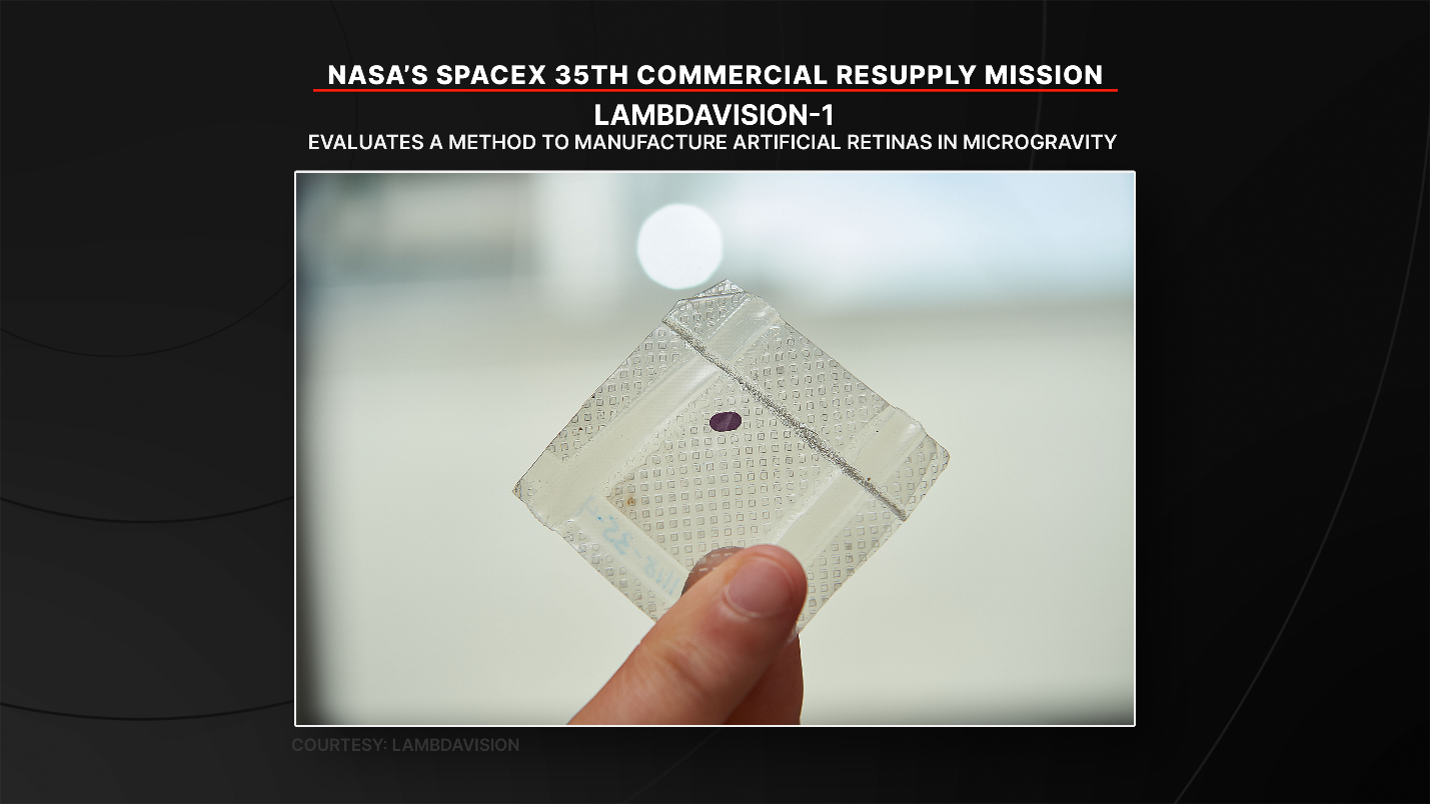
通过LambdaVision-1实验,NASA正在测试如何在微重力环境中逐层叠加薄膜,制造人工视网膜。微重力环境下沉降减少,可能使各层更加均匀、稳定,从而有望改善植入物的性能。这些人工视网膜有望帮助地球上目前尚无法治愈的视网膜疾病患者恢复视力。
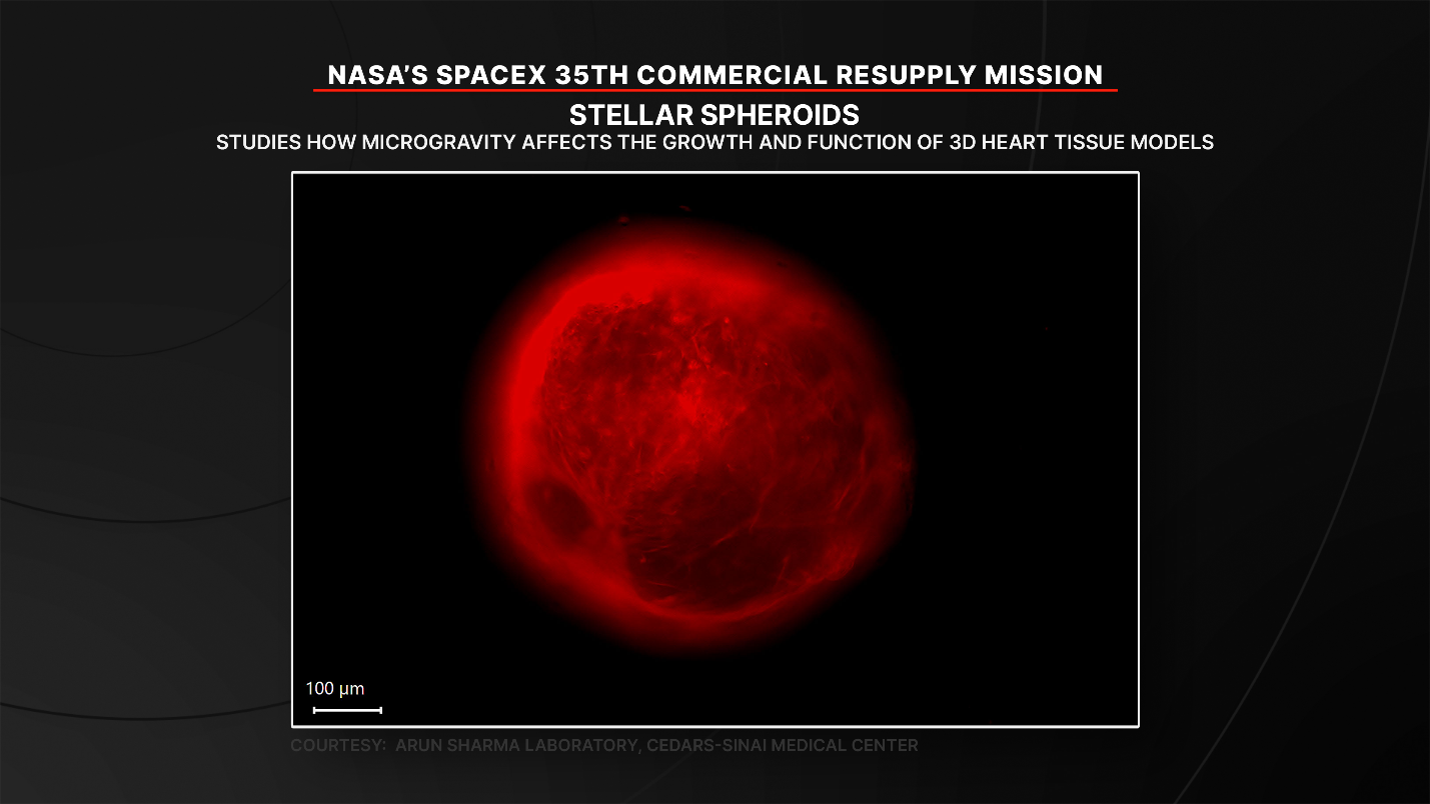
NASA将通过Stellar Spheroids实验,研究微重力如何影响三维人体心脏组织模型的生长和功能。研究人员将评估微重力是否有助于形成更完善的血管网络。研究结果有望帮助研究人员开发更逼真的心脏组织模型,用于疾病研究,并支持在未来太空任务中开展更大规模的药物测试。
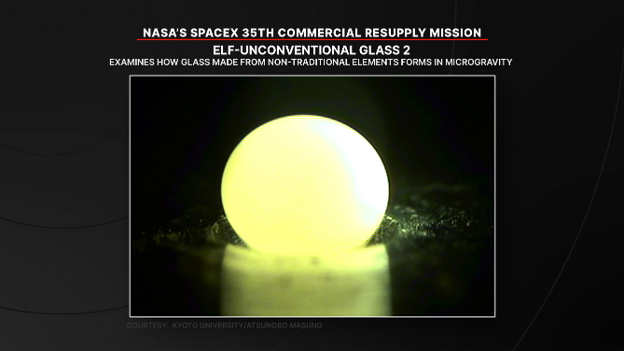
ELF-Unconventional Glass 2实验使用非传统元素,研究玻璃在微重力环境中如何形成。研究人员将在太空中观察材料的熔融行为,随后将固体样品送回地球进行详细分析。这些非常规玻璃有望为航天器、居住设施及其他探测技术提供更高的强度、更优的光学性能和更好的耐久性。
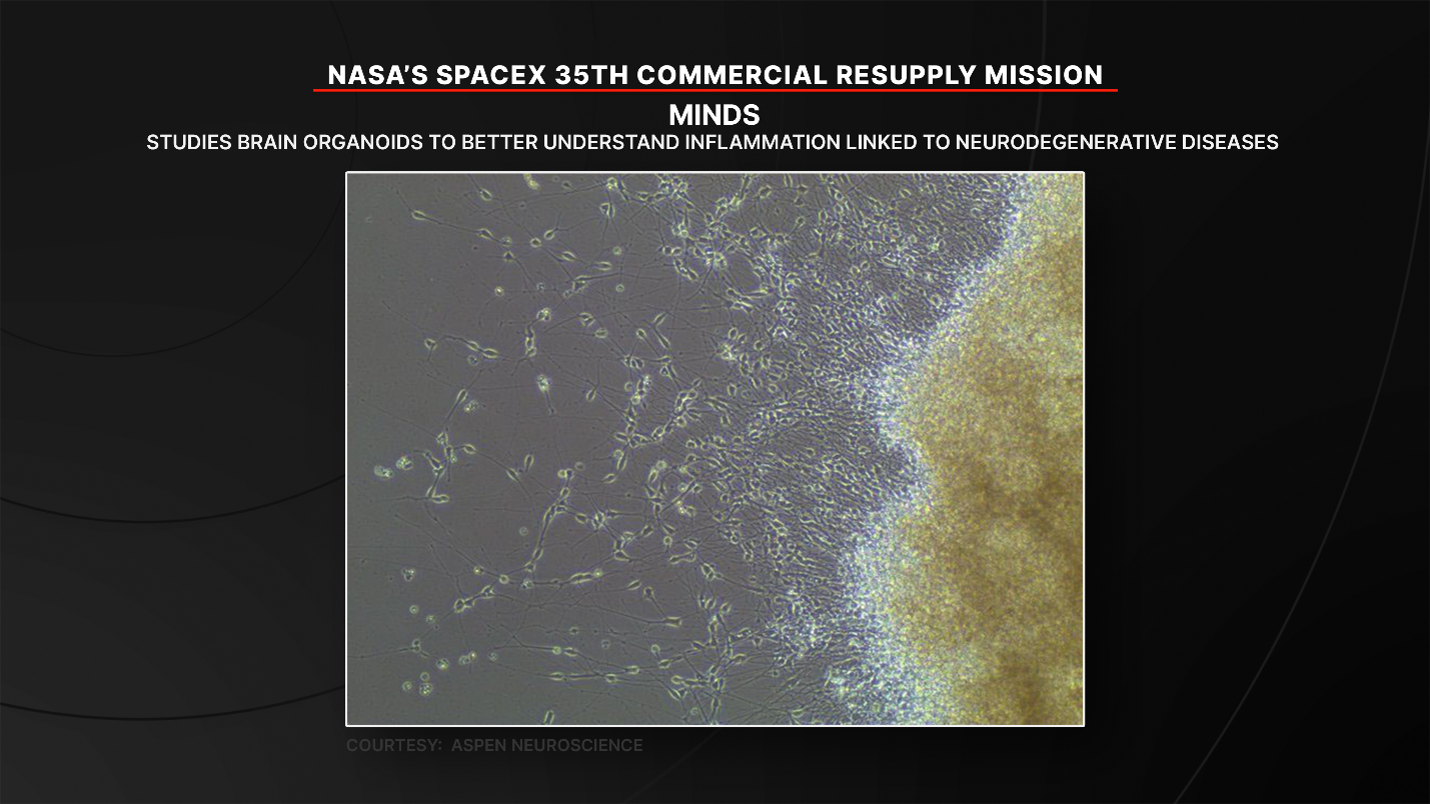
MINDS实验研究脑类器官,以更好地了解与神经退行性疾病相关的炎症。这项研究使用“类器官村落”,将来自多个人的细胞组合在一起,以更好地体现患者的多样性。研究结果有望帮助确定治疗阿尔茨海默病、帕金森病和多发性硬化症等疾病的新靶点。
抵达与返回
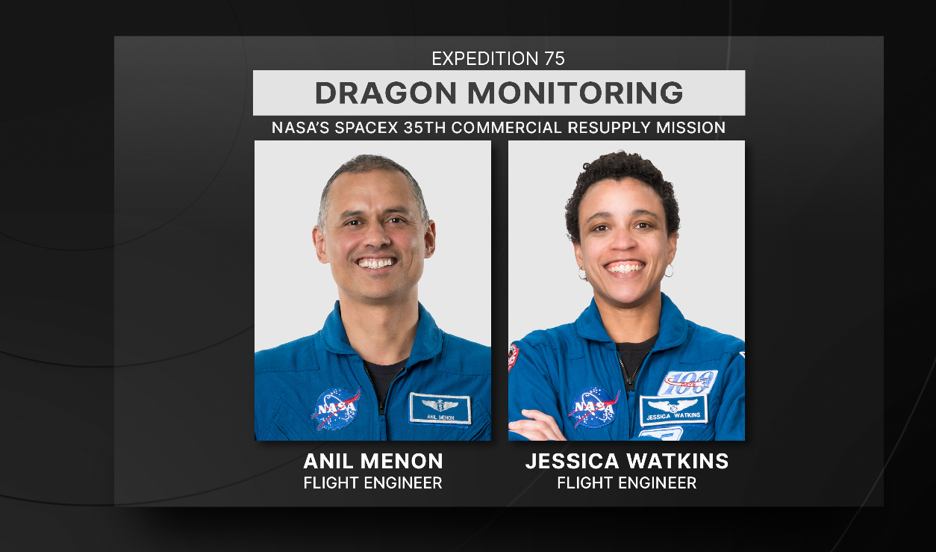
NASA宇航员阿尼尔·梅农和杰西卡·沃特金斯将监控“龙”飞船的抵达过程。飞船将与这座轨道实验室保持对接约一个月,随后在太平洋溅落,将关键科研物资和硬件带回,交还地面团队。
货物亮点
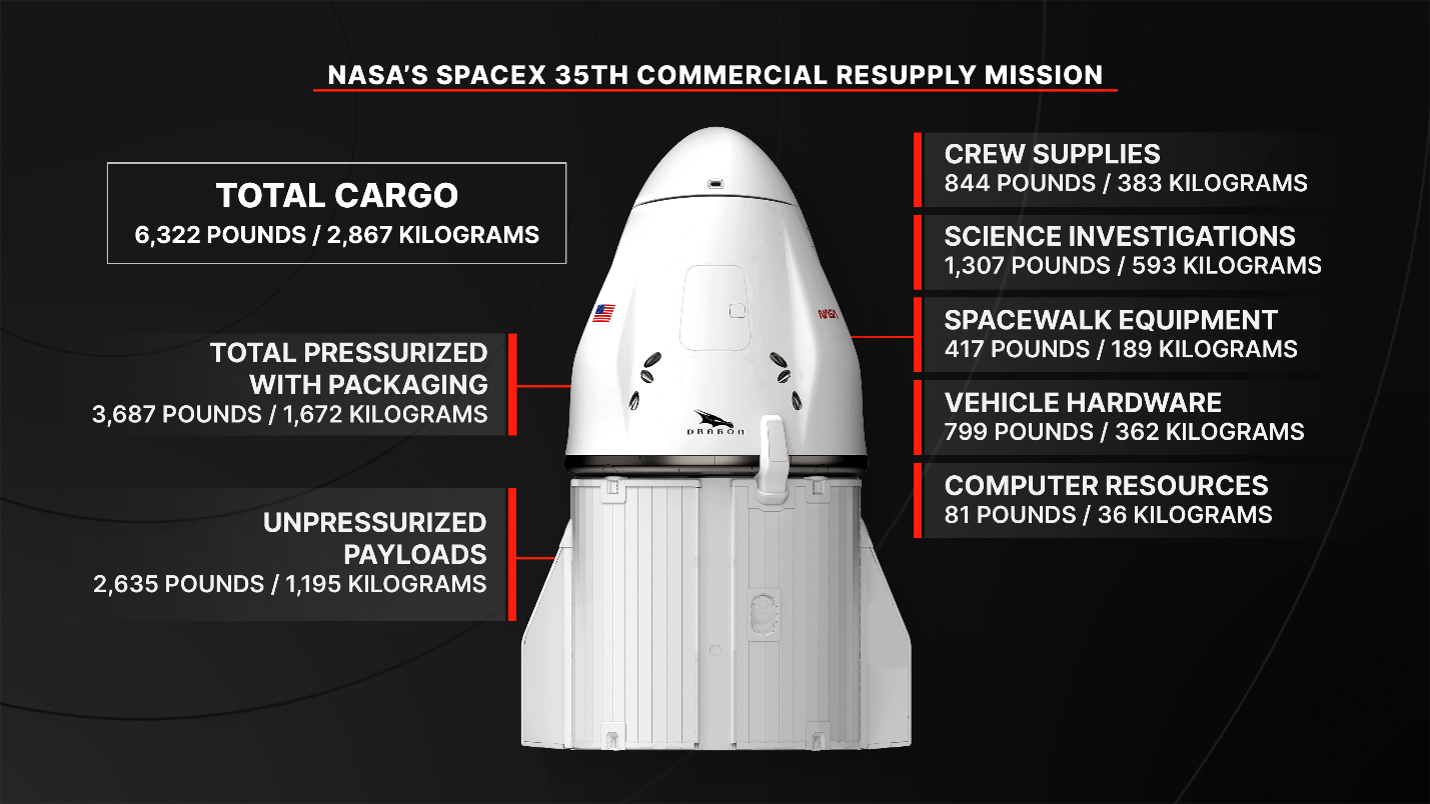
发射
国际空间站卷展式太阳能电池阵(IROSA)——这是将安装到空间站上的最后一对IROSA,安装后将完成空间站供电系统的增强工作,以支持包括安全、受控离轨在内的关键运行任务。
可折叠式接尿器(Collapsible Continency Urinal)及配套硬件——用于支持NASA“阿耳忒弥斯3号”任务的演示和测试装置。
加拿大臂2号(Canadarm2)关节飞行保障设备——一个大型泡沫翻盖式保护壳将以空载状态升空,用于运回在6月30日太空行走期间被更换下来的故障机械臂关节。关节返回地球后,团队将在地面对其进行分析。
其他随飞船发射的设备包括马桶加药泵、马桶预处理质量传感器,以及机器人微型锥形工具。该工具用于涉及舱外更换单元和载荷的空间站维护与应用任务。
返回
“龙”飞船于11月中旬返回时,将带回加拿大臂2号的故障关节,以供分析和翻修;同时还将带回一套需要在地面翻修的航天服、来自尿液处理装置的流体与压力控制泵组件,以及水处理组件的过滤单元。
展开英文原文 · 与中文逐段对应
NASA’s SpaceX 35th Commercial Resupply Mission Overview - NASA
NASA and SpaceX are targeting no earlier than Tuesday, Oct. 13 to launch scientific investigations, supplies, and equipment to the International Space Station.
Loaded with more than 6,300 pounds of supplies, the SpaceX Dragon spacecraft will lift off aboard the company’s Falcon 9 rocket from Space Launch Complex 40 at Cape Canaveral Space Force Station in Florida. Following its arrival to the orbital complex, Dragon will autonomously dock to the space-facing port of the space station’s Harmony module.
NASA will stream launch and docking coverage through a variety of platforms. Learn where to watch online:
https://www.nasa.gov/live
For more than 25 years, the International Space Station has supported research by scientists from more than 110 countries, enabling more than 4,000 experiments in microgravity. Research conducted aboard the station helps advance long-duration missions to the Moon as part of the Artemis program and to Mars, while also providing multiple benefits to humanity.
Science Highlights
In addition to cargo for the crew aboard the space station, Dragon will deliver several new science experiments, including:
With LambdaVision-1 , NASA is testing how to manufacture artificial eye retinas in microgravity, building them one thin layer at a time. Reduced settling in microgravity may create more uniform, stable layers, potentially improving implants’ performance. These artificial retinas could help restore vision for patients with currently incurable retinal diseases on Earth.
NASA will use the Stellar Spheroids experiment to study how microgravity affects the growth and function of 3D human heart tissue models. Researchers will assess whether microgravity improves the formation of advanced vascular networks. Results could help researchers develop more realistic heart tissue models for disease research and support larger‑scale drug testing on future space missions.
Using non-traditional elements, ELF-Unconventional Glass 2 studies how glass forms in microgravity. Researchers will observe molten behavior in space, then return solid samples to Earth for detailed analysis. These unconventional glasses could offer higher strength, improved optical capabilities, and greater durability for spacecraft, habitats, and other exploration technologies.
The MINDS experiment studies brain organoids to better understand inflammation linked to neurodegenerative diseases. The investigation uses “organoid villages,” which combine cells from multiple people to better represent patient diversity. Results could help identify new treatment targets for diseases like Alzheimer’s, Parkinson’s, and multiple sclerosis.
Arrival and Return
NASA astronauts Anil Menon and Jessica Watkins will monitor the Dragon spacecraft’s arrival. It will remain docked to the orbiting laboratory for about a month before splashing down in the Pacific Ocean, returning critical science and hardware to teams on Earth.
Cargo Highlights
Launch
International Space Station Roll-Out Solar Arrays (IROSA) – The final pair of IROSAs that will be installed on the space station, completing the augmentation of its power system to support critical operations, including its safe and controlled deorbit.
Collapsible Continency Urinal and supporting hardware – A demonstration and test unit supporting NASA’s Artemis III mission.
Canadarm2 joint flight support equipment – A large foam clamshell will fly empty to return the failed robotic arm joint that was replaced during a June 30 spacewalk. After its return to Earth, teams will analyze the joint on the ground.
Additional equipment launching includes a toilet dose pump, a toilet pretreat quality sensor, and a robot micro-conical tool used for space station maintenance and utilization tasks with external replacement units and payloads.
Return
When Dragon returns in mid‑November, it will bring back the failed joint on the Canadarm2 for analysis and refurbishment, a spacesuit for ground refurbishment, a fluid- and pressure-control pump assembly from the urine processor, and a filtration unit for the water processor assembly.
查看本期独立摘要
中文独立摘要 · AI 整理
这件事
NASA 公布第35次 SpaceX 商业补给任务计划:最早10月13日发射,将超过6300磅的科研设备、物资和硬件送往国际空间站。载荷包括人工视网膜制造、三维心脏模型、玻璃材料和脑类器官相关实验,以及最后一对新增太阳能电池阵列。任务预计在站停留约一个月。
本页概括所列来源的重点,属于独立摘要;完整报道请阅读原站。整理时间:2026年10月8日 11:37(北京时间)。
信息从哪里来
依据 NASA 任务总览全文整理;站内提供这篇总览的完整译文、原文及8张署名配图。发射和返回均为计划状态。
- NASA 新闻发布 原始发布